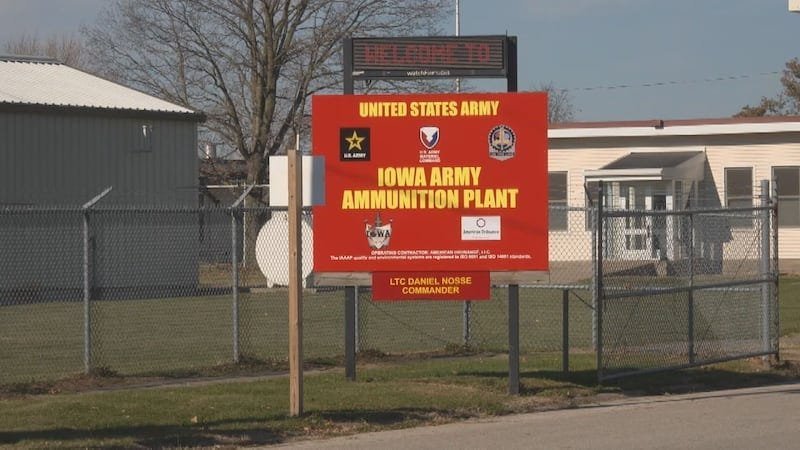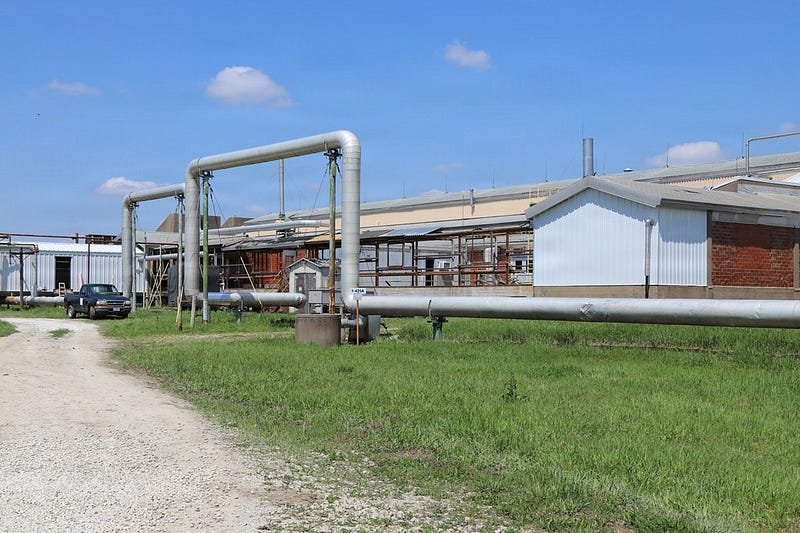
JEFFERSON CITY, MO, Missouri state officials moved to reassure northeast Missouri residents on Tuesday ahead of a scheduled Wednesday controlled detonation of unstable, degraded lead azide at the Iowa Army Ammunition Plant in Middletown, Iowa. In an update issued by Governor Mike Kehoe's office, state environmental and health regulators confirmed that newly released U.S. Army dispersion modeling indicates the federal operation poses minimal risk to Missouri communities, livestock, and agricultural land located roughly 57 miles south of the military facility. The emergency disposal operation is designed to safely neutralize volatile legacy munitions components before they can trigger an uncontrolled, spontaneous explosion.
To prevent hazardous heavy metal fallout from drifting across state lines, a federal multi-agency team has engineered an unprecedented containment barrier around the blast site. Engineers packed the concrete bunker housing the degraded lead azide with layered fortifications of earth, sand, water, and two feet of specialized high-expansion foam to suppress the shockwave and trap airborne particulates. According to the U.S. Army's atmospheric and surface dispersion maps released Tuesday, projected lead concentrations in northeast Missouri will remain well within acceptable federal air and surface safety standards, registering at only a fraction of the Permissible Exposure Limit established by the Occupational Safety and Health Administration for general industry and construction workers.
Despite the low projected environmental impact, Jefferson City has activated its State Emergency Operations Center to monitor real-time weather shifts and coordinate directly with Pentagon and federal environmental teams throughout Wednesday's blast window. Governor Kehoe emphasized that keeping Missourians safe requires transparent, fact-based communication as state agencies track the airmass trajectory over northern counties. Both the Missouri Department of Natural Resources and the Missouri Department of Health and Senior Services confirmed they do not anticipate a serious threat to public health, while noting that the U.S. Army will continuously refresh its dispersion maps online based on updated wind and meteorological forecasts.