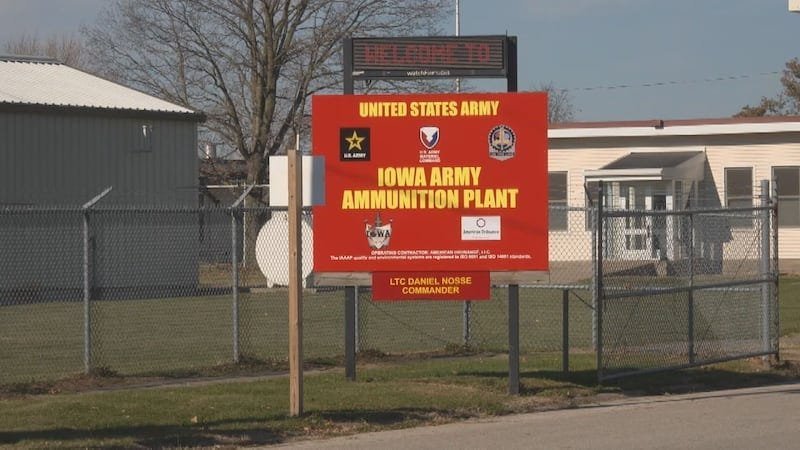
WASHINGTON, D.C., – Emergency management agencies across Iowa, Illinois, and Missouri mobilized on Tuesday night as federal defense officials prepared for a high-stakes controlled detonation of unstable, degraded lead azide at the Iowa Army Ammunition Plant in Middletown, Iowa. Triggering wireless emergency alerts across a 20-mile radius through the Federal Emergency Management Agency, the Pentagon operation aims to neutralize volatile legacy munitions components before they can spark a catastrophic, spontaneous explosion. While U.S. Army dispersion models and National Oceanic and Atmospheric Administration forecasts project east-northeast winds will carry the resulting airborne plume southwest across southeast Iowa toward northern Missouri, emergency operations centers in Springfield and Jefferson City remain partially activated to track any sudden meteorological shifts along the Mississippi River corridor.
To contain the shockwave and prevent toxic heavy metal fallout from blanketing surrounding agricultural communities, a federal multi-agency engineering team fortified the Middletown concrete bunker with dense layers of earth, sand, water, and two feet of specialized high-expansion foam. Even with those unprecedented containment barriers in place, federal authorities ordered targeted evacuations within five miles southwest of the installation and instructed all residents within 20 miles, including border communities in western Illinois, to shelter indoors with windows sealed against lead dust, noise, and structural vibration. State health officials in Des Moines warned children under age six, pregnant women, and individuals with chronic illnesses to vacate the projected plume path entirely, while agricultural regulators issued urgent protective protocols for roughly 350 farms and livestock operations situated inside the fallout corridor.
Across state lines, governors and environmental regulators worked to balance rigorous public safety warnings with measured reassurances based on federal atmospheric modeling. Illinois Governor JB Pritzker directed the Illinois Environmental Protection Agency to press federal partners for exact air monitoring locations along the state border, while Missouri Governor Mike Kehoe noted that projected lead concentrations 57 miles south of the blast site will remain well within federal occupational safety standards. Simultaneously, the U.S. Environmental Protection Agency launched continuous air, soil, and water sampling around the facility and initiated development of a public-facing monitoring dashboard to track environmental conditions before, during, and after the detonation.
In Washington and Des Moines, the emergency disposal operation has already ignited fierce political scrutiny over Pentagon oversight of aging domestic munitions stockpiles. Following a high-level military briefing and a Tuesday press conference by Acting Army Secretary Adam Telle, U.S. Senator-elect Josh Turek condemned the lack of early public transparency and questioned how hazardous primary explosives at the Middletown facility were permitted to degrade to a critical threshold. Vowing to launch formal Senate investigations and oversight hearings upon taking office, Turek emphasized that forcing an earlier operational delay secured vital preparation time for Midwest families and farmers while demanding full federal accountability to prevent future munitions safety failures.