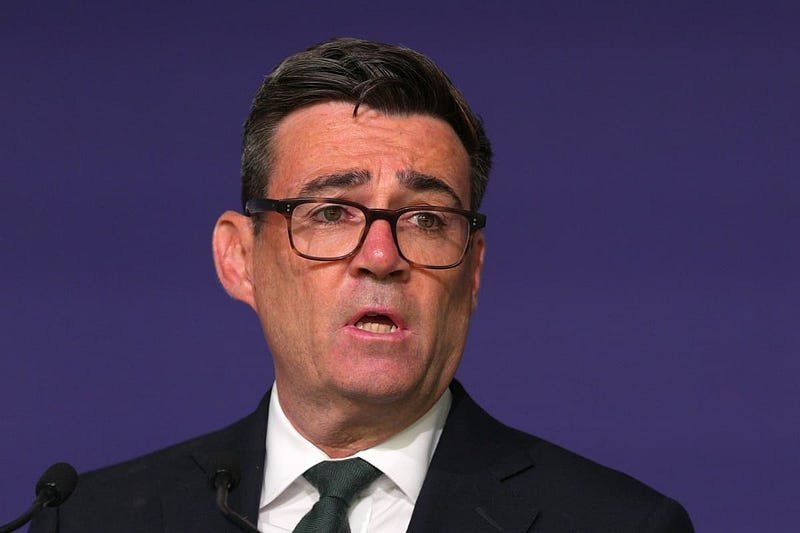
LONDON- British Prime Minister Andy Burnham unleashed a sweeping slate of domestic legal reforms and historical accountability measures on Tuesday while forcefully defending his government's post-Brexit reset agreement with the European Union before a combative House of Commons. Writing in a high-profile commentary and addressing lawmakers in Westminster, Burnham declared recent high-profile sexual assault trials a watershed moment for British justice, signaling plans for a broad statutory ban on non-disclosure agreements used to silence victims of abuse. Ahead of targeted legislation taking effect in January that will empower victims of crime and workplace harassment to speak openly regardless of signed confidentiality clauses, the Prime Minister indicated Downing Street is prepared to go even further to end institutional cover-ups across Britain.
Alongside the legal crackdown on gagging orders, Burnham fulfilled a long-standing pledge to British Cold War servicemen by ordering an independent, Hillsborough-style investigative panel into 1950s and 1960s nuclear testing programs. Modeled on the landmark inquiry that uncovered state failures surrounding the 1989 Hillsborough stadium disaster, the new panel will examine classified records and medical evidence regarding radiation exposure suffered by British troops during atomic trials in Australia and the South Pacific. The busy day at 10 Downing Street also featured a historic constitutional milestone as Burnham welcomed Prince William for talks on international affairs and homelessness, marking the Prince of Wales's first official visit to meet a serving prime minister at No. 10 and the first such visit by a senior royal since Queen Elizabeth II in 2012.
Across Europe and in Washington, diplomatic observers are closely tracking Burnham's high-stakes effort to recalibrate Britain's strategic and economic ties with Brussels following last week's UK-EU summit. Defending the newly minted bilateral pact in Parliament as a pragmatic step forward for British trade and security, Burnham highlighted agreements to slash agricultural export red tape, link emissions trading systems, establish a reciprocal youth mobility scheme, and ease European touring rules for British musicians. However, the accord has ignited fierce partisan backlash in Westminster, where Conservative leader Kemi Badenoch accused the Prime Minister of attempting to drag Britain back to 2015 without a democratic mandate. Dismissing former Tory prime ministers who warned against reopening European debates as stuck in the past, Burnham insisted that while closer cooperation strengthens European stability, it would remain unthinkable for the United Kingdom to rejoin the European Union without a fresh public referendum.