WASHINGTON, D.C., - President Donald Trump’s administration triggered a major new front in global trade policy while suffering a sharp constitutional setback in federal court, capping a turbulent pre-Thanksgiving week across Washington that also saw a sweeping national cybersecurity shakeup and escalating warnings over the stalemated conflict with Iran.
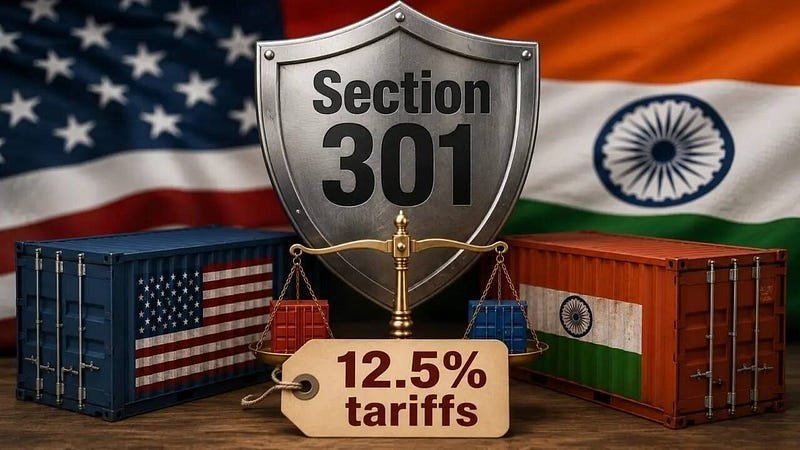
On Wednesday, the Office of the United States Trade Representative issued affirmative determinations under Section 301 of the Trade Act of 1974 against 14 major trading partners over alleged structural excess manufacturing capacity, proposing fresh duties on China, the European Union, Japan, South Korea, India, Taiwan, Switzerland, and seven Southeast Asian economies. The move revives the administration’s aggressive tariff agenda following the Supreme Court’s February 2026 decision invalidating earlier emergency duties. Under the proposal, Chinese imports face a baseline 20 percent tariff rate that could surge up to 40 percent when combined with forced-labor duties if bilateral negotiations stall before January 2027 public hearings.
For businesses and policymakers across the United States and key Indo-Pacific partners such as India and Japan, the Section 301 announcement introduces immediate supply-chain uncertainty despite administration assurances that many proposed levies track existing bilateral trade frameworks. While EU officials in Brussels warned Washington to honor existing transatlantic trade commitments, U.S. Trade Representative Jamieson Greer indicated the tariffs will not take effect for several months pending formal public comment.
Hours after the trade rollout, the White House absorbed a decisive legal defeat when U.S. District Judge Loren AliKhan issued a preliminary injunction blocking Federal Communications Commission Chairman Brendan Carr from pursuing early license renewal reviews against eight Disney-owned ABC television stations. Declaring that the dispute was not a close case, Judge AliKhan ruled that the agency’s unprecedented review constituted likely First Amendment retaliation driven by President Trump’s public criticism of ABC news coverage and late-night host Jimmy Kimmel.
Amid the trade and legal clashes, the administration moved to fortify domestic digital defenses by launching a whole-of-government critical infrastructure initiative. President Trump tapped Pentagon Chief Information Officer Kirsten Davies to serve as National Cyber Director and appointed General Joshua M. Rudd to lead the National Security Agency and U.S. Cyber Command, backed by nearly 500 newly recruited engineers under the United States Tech Force.
Internationally, the President’s foreign policy focus remained locked on the Persian Gulf, where a U.S. naval blockade continues to choke Iranian oil exports nine months after Operation Epic Fury began. In remarks ahead of the holiday, President Trump noted that U.S. military operations against Iran remain funded through January 2027, underscoring a narrowing strategic window before the newly elected Democratic congressional majority takes office in the new year.