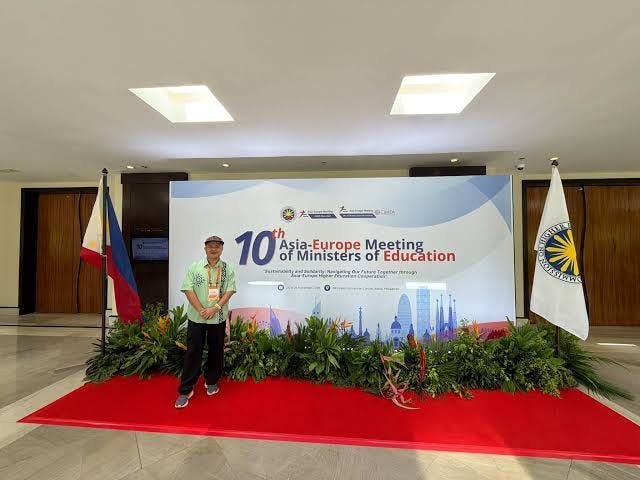
BERN / BOHOL, Philippines, — Switzerland reinforced its commitment to international academic mobility and workforce readiness on November 25 and 26, 2026, as Swiss Ambassador to the Philippines Edgar Dörig represented Bern at the 10th Asia-Europe Meeting of Ministers for Education (ASEMME10) in Panglao, Bohol. Convened under the theme of sustainability and solidarity in higher education cooperation, the two-day ministerial gathering brought together roughly 150 delegates from across Europe and Asia alongside representatives from the European Union and the ASEAN Secretariat to align cross-border education policy with rapidly shifting global labor demands.
During the ministerial roundtable on lifelong learning and inclusion, Ambassador Dörig spotlighted the core pillars of Switzerland's globally renowned education system. He emphasized the pivotal role of dual vocational education and training, the diversity of academic and professional tracks, and the structural flexibility that enables learners to transition seamlessly between different educational pathways throughout their careers. For European policymakers, Asian education ministries, and multinational employers operating across both continents, the Swiss model offers a proven blueprint for bridging technical skills gaps while maintaining high employment and social inclusion.
Hosted by the Philippine Commission on Higher Education during the Philippines' 2026 ASEAN Chairship, the Bohol summit addressed three urgent strategic priorities under the ASEM Education 2030 framework. Alongside lifelong learning, ministers and senior officials examined higher education's role in accelerating the blue economy as well as the green and digital transitions. Delegates also focused heavily on removing bureaucratic barriers to student and researcher exchanges by strengthening mutual recognition of academic qualifications and quality assurance standards between European and Asian institutions.
As global universities and national governments from Brussels and Bern to Manila and New Delhi race to prepare students for artificial intelligence disruption and climate transition, the outcomes of ASEMME10 underscore the growing strategic weight of bi-regional talent corridors. Since its inception in 1996, the Asia-Europe Meeting platform has expanded to encompass 27 EU member states, Switzerland, Norway, the United Kingdom, the European Union, 21 Asian nations, and the ASEAN Secretariat, making its biennial education dialogue a critical driver of international academic standards and cross-border workforce mobility.