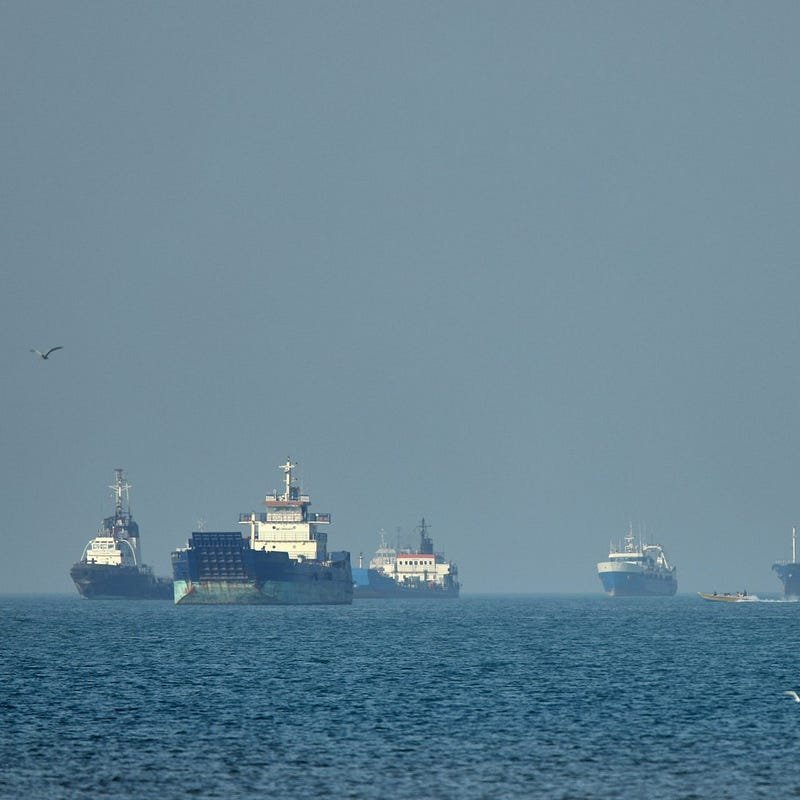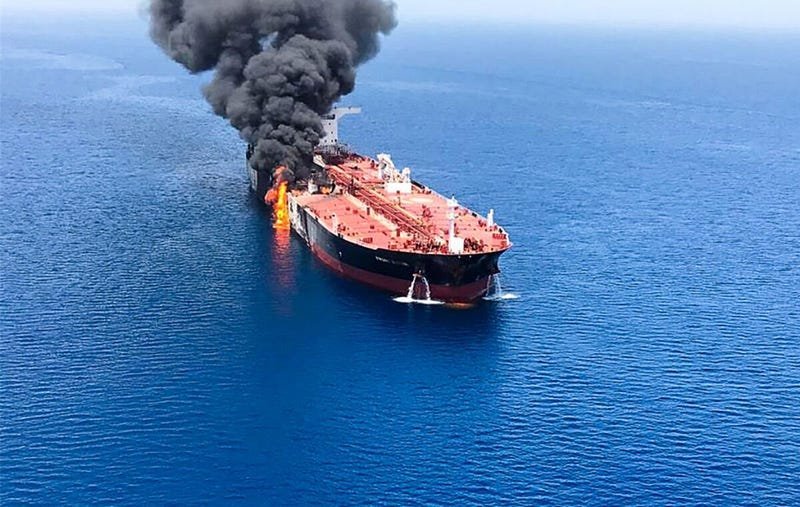
Global energy markets opened Monday, November 23, caught in a fierce tug-of-war between escalating military strikes on Middle Eastern oil infrastructure and broader financial market jitters following last week's global technology stock rout. Benchmark Brent crude futures hovered in a tight range just above $92 a barrel while U.S. West Texas Intermediate traded near $83 as investors weighed severe maritime disruptions in the Persian Gulf against forecasts of ample non-Gulf supply heading into 2027. Over the weekend, commercial shipping incidents in and around the Strait of Hormuz surged to their highest levels since the U.S.-Israeli conflict with Iran erupted in late February, with multiple tankers struck by projectiles and naval mines while Iran-aligned Houthi militants claimed Sunday drone and missile attacks against Saudi Arabia's Petrol Rabigh oil refinery. For energy strategists and policymakers in the United States, the dual shock of ongoing Gulf hostilities and Sunday's dramatic collapse of United Nations climate negotiations in Türkiye underscores how geopolitical conflict and stalled multilateralism are reshaping global fuel security.
Maritime intelligence compiled by the United Kingdom Maritime Trade Operations Centre and the International Maritime Organization confirms that attacks on commercial vessels transiting the Strait of Hormuz have climbed to record monthly highs, surpassing 30 incidents in October and topping 22 confirmed strikes in November alone. Since Friday, projectiles and mines have ignited fires aboard multiple vessels—including the Marshall Islands-flagged chemical tanker Captain Leon, Hong Kong-flagged crude carriers Torkel and Arina, and two additional tankers entering restricted waters near Oman—forcing shipowners to weigh daily charter rates exceeding one million dollars against acute physical danger. According to the International Energy Agency, months of Hormuz chokepoint disruptions have removed a cumulative 2.8 billion barrels of oil and 60 billion cubic meters of natural gas from Gulf export flows, prompting G7 and IEA member nations to deploy emergency strategic reserves earlier this year while pushing global diesel markets under severe strain.
Despite these persistent physical threats to one-fifth of the world's seaborne oil trade, crude benchmarks have shed roughly one-fifth of their value over the past month as rising American crude inventories, surging production outside the Middle East, and weakening global demand growth cushion prices. U.S. commercial crude stocks climbed by 3.4 million barrels to 417.8 million barrels alongside record domestic output near 14 million barrels per day, while the IEA projects global oil consumption will contract by 2.7 million barrels per day in 2026—its first annual decline since 2020. Traders are now turning their attention to Sunday, November 29, when ministers from OPEC+—led by Saudi Arabia and Russia—convene to decide their 2027 production policy after keeping output targets steady through December.
In European natural gas and power markets, weather risks are colliding directly with geopolitical supply anxiety as winter heating demand accelerates. Meteorologists and commodity analysts at Wood Mackenzie warn that an unusually early breakdown of the polar vortex—occurring alongside a developing El Niño weather pattern—threatens to unleash bitter cold across Northern Europe at a moment when European Union underground gas storage sits at its lowest seasonal level in more than a decade. Combined with sluggish wind power generation across North Sea grids in early November, rapid storage withdrawals have kept European benchmark Dutch TTF natural gas prices elevated near 87 euros per megawatt hour, heightening competition between European utilities and Asian liquefied natural gas buyers for spot cargoes.
Simultaneously, the long-term trajectory of the global energy transition suffered a major diplomatic setback on Sunday, November 22, when the COP31 climate summit in Antalya, Türkiye, collapsed after 44 hours of overtime without a final agreement. Fierce opposition from major oil- and gas-producing nations led drafters to strip explicit fossil fuel phaseout language from the closing text, triggering a walkout by the European Union and climate-vulnerable island states and sinking a proposed global pledge to boost electricity's share of total energy consumption from 23 percent to 35 percent by 2035. With multilateral climate diplomacy deadlocked and military tensions simmering across the Persian Gulf and the Baltic Sea, energy security and supply chain resilience have firmly eclipsed emissions pledges as the primary drivers of global energy policy heading into 2027.