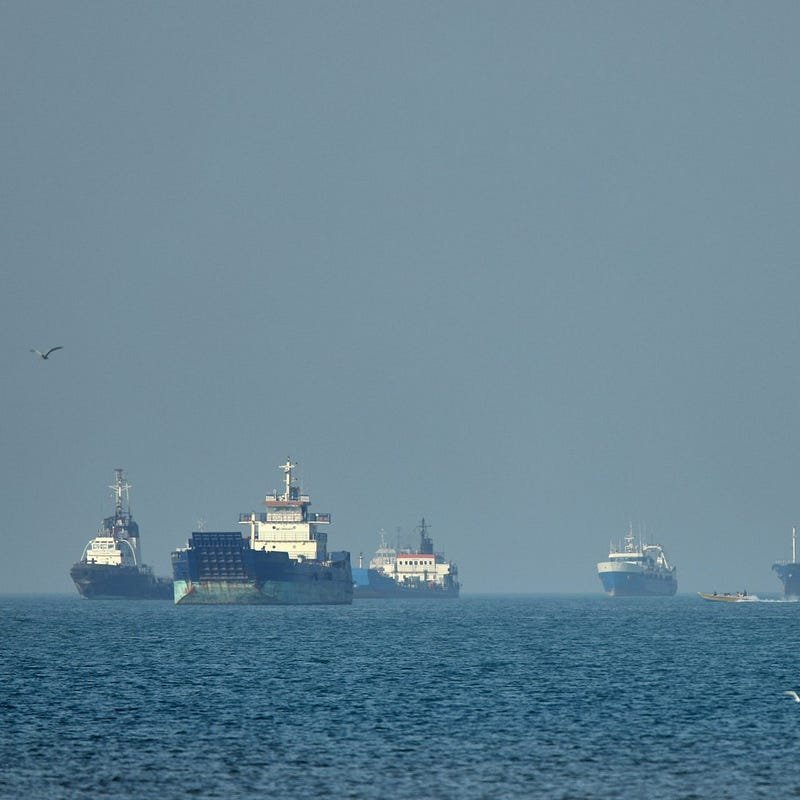
Maritime security across the Persian Gulf has deteriorated sharply over the past 48 hours after two oil tankers caught fire near the Strait of Hormuz and Iranian forces expanded drone and missile strikes against Gulf infrastructure, prompting urgent consultations between Washington and regional allies. Iranian naval authorities reported Sunday, November 22, that the two commercial tankers were engulfed in flames after striking naval mines in a restricted zone east of the strategic waterway, following projectile attacks on vessels transiting near Oman's Musandam Peninsula. Simultaneously, the Islamic Revolutionary Guard Corps claimed responsibility for targeting United States air defense radar installations in Bahrain—where officials reported a fire at a civilian industrial facility—while warning that Tehran will not reopen normal passage through the Strait of Hormuz unless Washington lifts its naval blockade and offers concrete concessions. For defense planners and energy strategists in the United States, the coordinated maritime offensive represents Tehran's boldest bid yet to break a grueling military stalemate by threatening one-fifth of the world's seaborne petroleum supply.
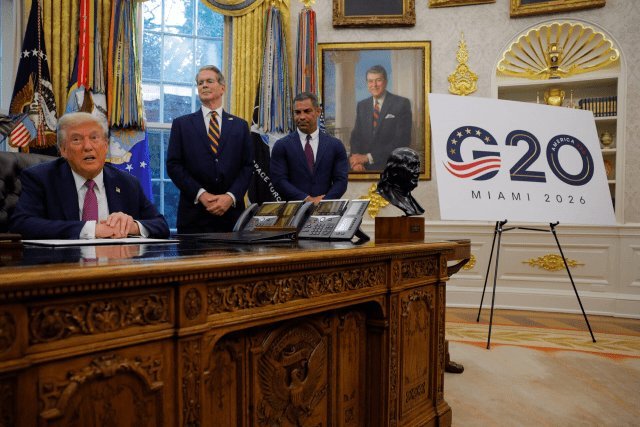
In Washington, President Donald Trump signaled over the weekend that he is inclined to postpone renewed American air strikes against Iran until the new year in hopes of securing what he described as a permanent diplomatic agreement, even as U.S. Central Command chief Admiral Brad Cooper concluded a weeklong tour of Saudi Arabia, Qatar, and Israel to reinforce allied air and naval defenses. While Trump dismissed Iranian claims that a U.S. fighter jet was damaged over the Gulf, Israeli defense officials are debating the risks of unilateral escalation after a restricted military intelligence briefing warned that fresh strikes on Iran could ignite a simultaneous multifront war across Lebanon, Syria, and Gaza.
Compounding the regional crisis, Iran-backed Houthi militants in Yemen launched a wave of long-range strikes against critical Saudi energy and military infrastructure over the weekend. According to military assessments from the Institute for the Study of War, Houthi forces targeted the major Petrol Rabigh oil refinery on Saudi Arabia's Red Sea coast alongside a Saudi radar installation in Riyadh Province on November 21 and 22, while simultaneously fortifying positions along the Bab al-Mandeb Strait. Inside Yemen, heavy fighting continued between Houthi fighters and government forces backed by the Saudi-led coalition, including air strikes on Houthi reinforcements in Taiz and a telecommunications facility in Hodeidah.
Elsewhere in the Levant, diplomatic and political fault lines deepened across Israel, Lebanon, and the Palestinian territories. In Jerusalem, coalition negotiations between caretaker Prime Minister Benjamin Netanyahu's Likud party and former military chief Gadi Eisenkot's Yashar party collapsed on Sunday without a deal, prolonging Israel's post-election political deadlock amid fierce domestic backlash over surging settler violence in the occupied West Bank. Meanwhile, in Beirut, Lebanese President Joseph Aoun marked his nation's 83rd independence anniversary by demanding an immediate Israeli troop withdrawal from southern Lebanon while publicly confronting Tehran, declaring that the era of weapons outside state control has ended and ordering Hezbollah to surrender its arsenal.
From the burning tankers in the Strait of Hormuz to ongoing Israeli military operations in Gaza and southern Lebanon, the Middle East enters the final week of November teetering on a razor's edge. With Egyptian Foreign Minister Badr Abdelatty warning that a purely military resolution to the conflict with Iran would unleash devastating regional fallout, Qatari mediators and U.S. diplomats face shrinking room to broker a ceasefire before winter weather and economic strain push the crisis into a dangerous new phase in 2027.