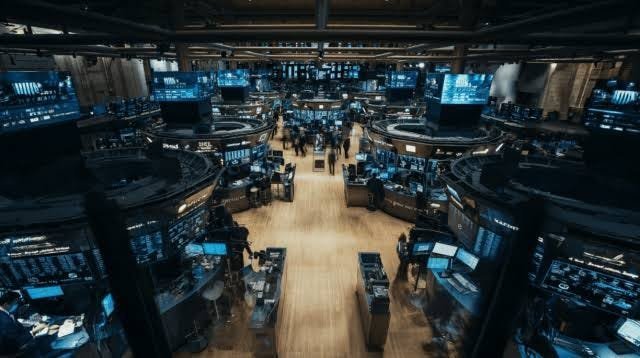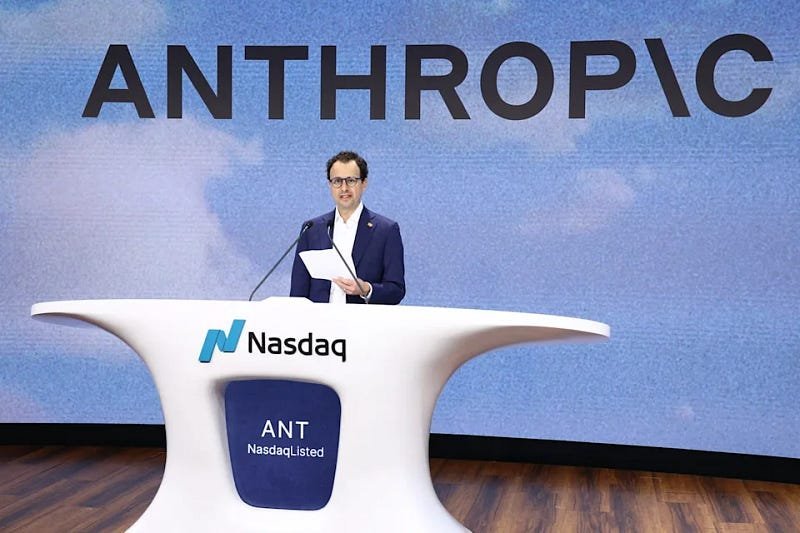
The global artificial intelligence sector enters the final week of November caught between explosive commercial adoption and historic financial turbulence after Anthropic completed the largest initial public offering in market history on Thursday, November 19, only to see its shares tumble the following day amid a sweeping $4 trillion global technology stock selloff. Raising more than $107 billion across its public flotation and private placements with Google, Microsoft, and Nvidia, the maker of the Claude AI model briefly touched a $2 trillion valuation before sinking nine percent on Friday as investors recoiled at the company's prospectus commitment to spend up to $900 billion on computing infrastructure over the next few years. While stock futures staged a tentative rebound late Sunday night ahead of Thanksgiving week, the sudden reversal has cast doubt over rival OpenAI's planned 2027 public listing and forced institutional bond and equity investors across New York, London, and Tokyo to scrutinize whether multi-trillion-dollar data center investments can generate timely profits.
Compounding investor anxiety across Silicon Valley is an unprecedented governance and regulatory crisis engulfing semiconductor bellwether Nvidia following the sudden resignation of co-founder and longtime chief executive Jensen Huang earlier this month. Alongside federal national security investigations into whether restricted advanced AI processors were routed to Chinese entities via third-country data centers in Southeast Asia, reports surfaced late last week that the U.S. Securities and Exchange Commission is examining potential accounting irregularities at the chipmaker. Combined with heightened scrutiny over circular financing deals—in which chip suppliers guarantee tens of billions of dollars in debt for cloud operators and AI labs buying their hardware—the turmoil sent Nvidia shares tumbling through their worst weekly losing streak since 2008.
Despite the Wall Street valuation reset, underlying enterprise demand for artificial intelligence tools continues to accelerate at a breakneck pace worldwide. According to a major market forecast released Monday, November 23, by technology intelligence firm Omdia, global AI software revenue is projected to surpass $200 billion in 2026—more than double its 2024 level—propelled by a 139 percent surge in generative AI and autonomous agent adoption across corporate coding, customer operations, and enterprise workflows. Meanwhile, frontier model competition continues to intensify on both sides of the Pacific as OpenAI unveiled its new Astra model following recent releases from Google and Anthropic, while Chinese lab DeepSeek rattled Western pricing models by releasing free open-source software enabling users to run capable AI models locally on personal hardware.
On the geopolitical and regulatory stage, artificial intelligence has emerged as a central pillar of superpower diplomacy and domestic legislative battles. During last week's Asia-Pacific Economic Cooperation summit in Shenzhen, U.S. President Donald Trump and Chinese President Xi Jinping reached a bilateral understanding affirming that human decision-makers—not autonomous algorithms—must retain ultimate control over major military systems, even as Washington tightened export restrictions on overseas cloud computing access for Chinese firms. In Washington, bipartisan House lawmakers have teased a federal AI Safety Framework bill ahead of January's incoming Democratic House majority, while Federal Reserve Governor Lisa Cook warned on November 20 that the rapid global buildout of AI data centers carries significant labor market transition and financial stability risks.
International friction over artificial intelligence governance also surfaced in Geneva over the weekend, where the International Committee of the Red Cross condemned major military powers—including the United States and Russia—for blocking immediate treaty negotiations on lethal autonomous weapons despite support from 163 nations at the United Nations. Simultaneously, in South Korea, a university exam cheating scandal driven by generative AI tools forced the resignation of a cabinet minister on Sunday, underscoring the immediate societal disruptions unfolding alongside boardroom battles. As global policymakers prepare to gather in Miami next month for the 2026 G20 Leaders' Summit—where pioneering AI innovation ranks among President Trump's top three official priorities—the industry stands at a defining crossroads between commercial maturation, regulatory oversight, and financial discipline.