NEW DELHI — Indian Prime Minister Narendra Modi unveiled a landmark $1.62 billion economic and reconstruction package for Nepal on Monday following bilateral summit talks with visiting Nepali Prime Minister Balendra Shah, signaling a decisive diplomatic reset between the two South Asian neighbors as Kathmandu recovers from catastrophic glacial floods and balances competing overtures from Beijing.
Worth roughly 240 billion Nepalese rupees, or 15,000 crore Indian rupees, the assistance represents one of New Delhi's largest-ever foreign aid commitments. The package blends $377 million in direct grants for post-disaster rebuilding and public infrastructure with a $1.24 billion line of credit dedicated to restoring Nepal's battered energy and hydropower grid.
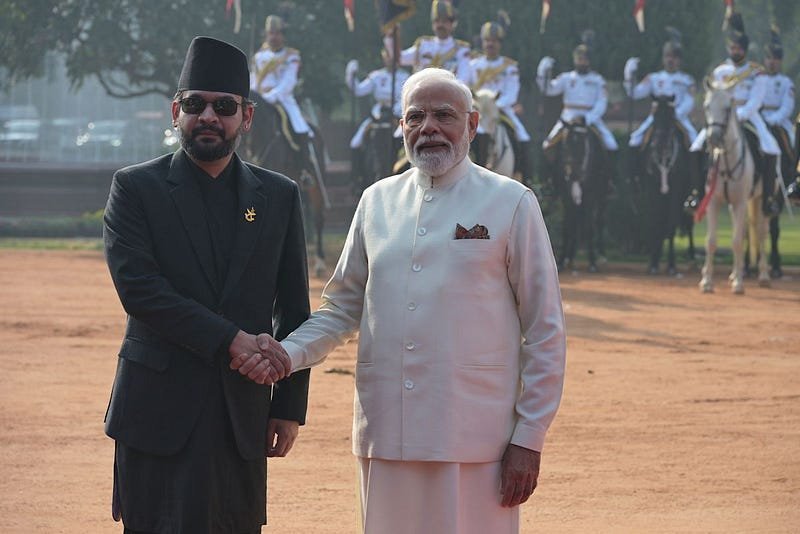
The announcement anchored Prime Minister Shah's first overseas state visit since the 36-year-old former rapper and Kathmandu mayor swept into office in March 2026 following youth-led anti-corruption protests that unseated former Prime Minister K.P. Sharma Oli. Standing beside Modi at Hyderabad House, Shah praised India as a steadfast first responder during times of crisis and expressed hope that bilateral trust would stand as tall as the Himalayas.
Nepal urgently sought international backing after a devastating August 26 glacier collapse unleashed torrential flash floods across the Rasuwa and Nuwakot regions, killing roughly 1,500 people, leaving more than 5,200 missing, and inflicting an estimated $4.7 billion in damage across roads, bridges, and over a dozen hydropower stations. Because the disaster wiped out nearly 10 percent of Nepal's electricity generation capacity, the Himalayan nation was forced to halt power exports and rely on Indian electricity imports to meet domestic demand.
Beyond disaster relief, the two leaders signed eight memorandums of understanding and unveiled sweeping connectivity, trade, and educational milestones. India granted landlocked Nepal transit access to two additional major seaports at Kandla and Paradip, announced plans to establish an offshore Indian Institute of Technology campus and startup innovation hub in Nepal, and signed agreements with the Indian Space Research Organisation to expand satellite communications. Modi and Shah also jointly inaugurated the Saryu-Kamla cross-border passenger train linking Ayodhya in India with Janakpur in Nepal alongside new petroleum pipeline and storage infrastructure.
While India declined to open new high-altitude air entry corridors over security sensitivities regarding Chinese-built airports at Pokhara and Bhairahawa, New Delhi agreed to convert the existing Kathmandu-Bhairahawa-Lucknow air route into a bidirectional corridor. By pairing immediate humanitarian grants with long-term energy and port integration, New Delhi moved decisively to reinforce its Neighbourhood First policy and solidify its economic primacy in Kathmandu.