NEW YORK, NY — India issued an urgent appeal at the United Nations Security Council on Monday to stop the targeting of commercial vessels and civilian sailors in the Black Sea, revealing that recent maritime strikes have killed five Indian seafarers and left two missing as the Russia-Ukraine war grinds through its fifth year.
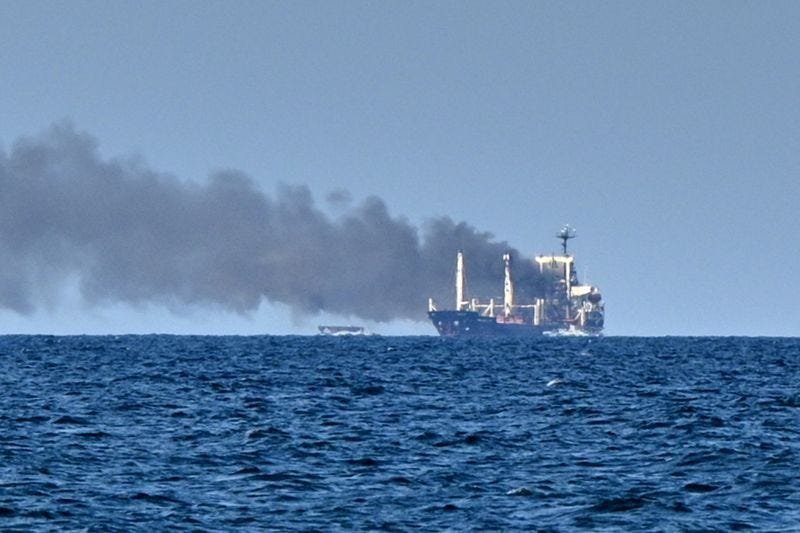
Addressing a high-level Security Council briefing convened under Latvia's monthly presidency on protecting critical energy infrastructure and Black Sea food lifelines, Indian Permanent Representative Ambassador Harish Parvathaneni cataloged a deadly wave of attacks against merchant shipping over the past four months. He disclosed that an Indian crew member died when the MV Omorfi was struck on July 18, followed by an October attack on the MV Royad Mammadov carrying three Indian nationals, and subsequent strikes on the MV Golden Leo and MV AGN RAGNAR that left four Indian mariners dead and two unaccounted for.
To confront the escalating peril facing global maritime crews, Parvathaneni highlighted that India and Liberia jointly launched the Group of Friends on Safety and Security of Shipping and Seafarers at the United Nations earlier this month, uniting the world's premier source of seafarers with its largest ship registry to bolster International Maritime Organization and International Labour Organization safeguards. Beyond diplomatic advocacy, New Delhi confirmed it is actively engaging both Moscow and Kyiv directly to secure safe passage along Black Sea grain export corridors and repatriate injured crew members.
Framing the conflict's economic fallout as an existential threat to developing nations, the Indian envoy warned that the Global South is bearing the heaviest burden of surging food, fuel, and fertilizer costs driven by simultaneous disruptions in the Black Sea, the Persian Gulf, and the Red Sea. Drawing a poignant historical parallel to the devastating 1943 Bengal famine that claimed more than three million Indian lives during World War II, Parvathaneni cautioned against allowing innocent populations in distant regions to become collateral damage of prolonged wartime calculations.
Noting that India and the Black Sea granaries together account for nearly one-fifth of global cereal production, Parvathaneni cited New Delhi's ongoing humanitarian grain and rice shipments to Afghanistan, Sudan, and Palestine as proof of its commitment to global food stability. Echoing Prime Minister Narendra Modi's repeated call to transition from endless war to the end of war, he underscored that for developing nations, peace is measured not in abstract rhetoric, but in full granaries, open sea lanes, and mariners returning home alive.