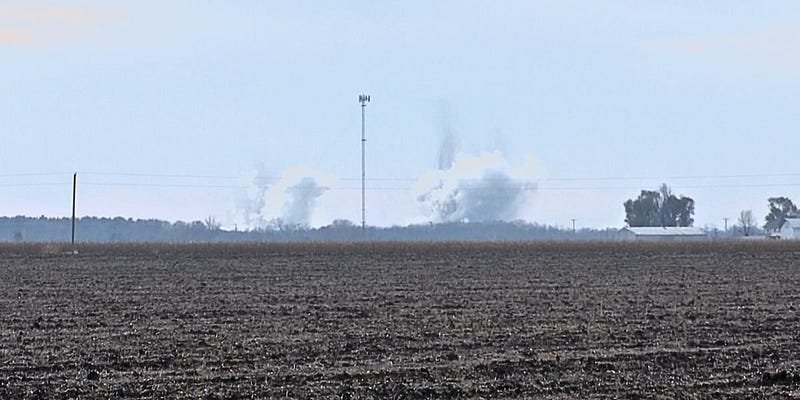
MIDDLETOWN, Iowa, — Federal environmental regulators confirmed on Thursday, November 26, 2026, that real-time air monitors continue to register zero detection of airborne lead following yesterday's controlled detonation of degraded lead azide at the Iowa Army Ammunition Plant in Middletown, Iowa. The update brings critical reassurance to Midwest communities, agricultural producers, and municipal water authorities across southeastern Iowa and neighboring Missouri as an unprecedented federal environmental surveillance operation moves into its second day.
Immediately following the controlled detonation at approximately 1:00 PM Central Time on November 25, 2026, a pre-positioned force of 300 U.S. Environmental Protection Agency personnel and specialized contractors deployed across the surrounding region to execute rapid post-detonation testing. Building on an extensive baseline of 1,591 air, water, soil, and dust samples collected prior to the operation, response teams have already gathered more than 1,000 post-detonation samples, including repeat assessments at over 130 previously tested residential and commercial structures. All continuous Xact real-time air monitoring systems stationed throughout the plume zone have reported zero airborne lead since the blast occurred, underscoring the precision of the containment protocols engineered for the disposal of the sensitive primary explosive compound.
Throughout Thanksgiving Day, EPA field teams expanded their testing perimeter to prioritize sensitive community infrastructure, conducting targeted sampling at local schools, daycares, churches, and public playgrounds while initiating a second comprehensive round of municipal drinking water checks. Working in close coordination with the U.S. Department of Agriculture, federal specialists also collected pre-detonation and post-detonation samples from nearby farms, agricultural ponds in Missouri, and every drinking water intake mapped within the pre-detonation plume model, alongside extensive water quality testing across the vital Mississippi River watershed.