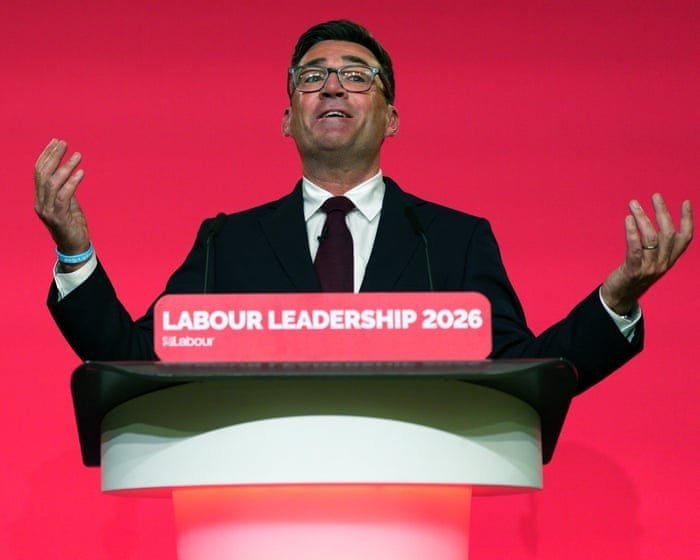
LONDON, — British Prime Minister Andy Burnham is confronting a high-stakes convergence of political, economic, and diplomatic challenges in Westminster after official data revealed net migration has fallen to its lowest level in nearly three decades, even as nearly 100 Labour lawmakers revolted over North Sea oil drilling and Downing Street confirmed steep financial exit penalties in its post-Brexit reset agreement with Brussels. Speaking after the Office for National Statistics reported that UK net migration dropped 92 percent from its 2023 peak to just 77,000 in the year ending June 2026, Burnham hailed the turnaround as proof that Britain has regained a sufficient degree of control over its borders. However, opposition leaders including Reform UK's Nigel Farage and Conservative frontbenchers warned that the sharp decline masks a troubling surge in high-skilled British taxpayers leaving the country for overseas financial hubs.
At the same time, Downing Street triggered fierce constitutional debate on Thursday by confirming that last week's sweeping UK-EU reset package—covering sanitary and phytosanitary trade rules, carbon-market linkage, and youth mobility—includes a binding ten-year termination clause requiring either London or Brussels to pay to rebuild border infrastructure if it withdraws early. The disclosure came in direct response to pledges by Farage and Conservative leader Kemi Badenoch to tear up the accord if elected, while Burnham sought to reassure Eurosceptic voters by insisting that rejoining the European Union without a public referendum remains unthinkable. For European policymakers in Brussels and transatlantic investors monitoring London's regulatory alignment ahead of the UK assuming the G20 presidency, the exit-cost safeguard locks in long-term commercial stability across British-European supply chains while intensifying Westminster's partisan battle over sovereignty.
Inside the ruling Labour Party, Burnham's leadership faces an acute internal test after 92 Labour backbenchers and four junior frontbenchers signed a formal letter demanding that the government block approval of the massive Rosebank oilfield in the North Sea on climate grounds. The rebellion pits environmental lawmakers directly against Chancellor John Healey and Scottish Labour MPs who favor greenlighting the project to protect domestic energy security, North Sea jobs, and Treasury revenues amid volatile global oil markets. Compounding pressure on Downing Street's governance agenda, Burnham also vowed sweeping Westminster lobbying reforms following the release of government vetting documents revealing how former U.S. Ambassador Peter Mandelson sought to influence cabinet appointments and broker high-level meetings for private clients.
Amid the domestic turmoil, Burnham maintained an active international posture on Thursday morning by hosting Jordan's King Abdullah II at 10 Downing Street to coordinate urgent winter humanitarian aid corridors into Gaza and press for broader Middle East de-escalation. Simultaneously, Bank of England Governor Andrew Bailey publicly endorsed Burnham's upcoming G20 agenda to establish international artificial intelligence standards while cautioning lawmakers to enforce strict human guardrails. How the Prime Minister balances Labour's green revolt, defends his European trade pact against right-wing challengers, and steers Britain's economic recovery will define his premiership entering 2027.