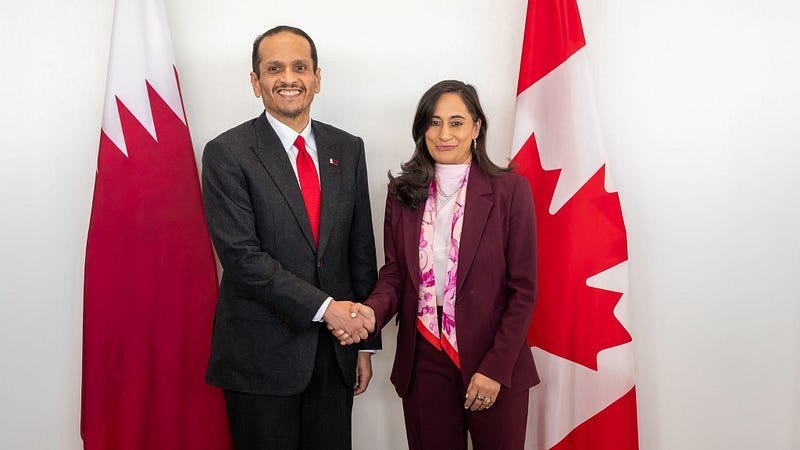
OTTAWA, Ontario — Canada and the State of Qatar dramatically elevated more than five decades of diplomatic ties this week, signing a landmark bilateral investment protection treaty and a critical consular agreement covering Canadian citizens in Afghanistan during their inaugural Strategic Dialogue in Ottawa. Co-chaired on November 24 by Qatari Prime Minister and Minister of Foreign Affairs Sheikh Mohammed bin Abdulrahman bin Jassim Al Thani and Canadian Minister of Foreign Affairs Anita Anand, the high-level summit established a formal institutional framework to accelerate cooperation across trade, artificial intelligence, defense, and global conflict mediation.
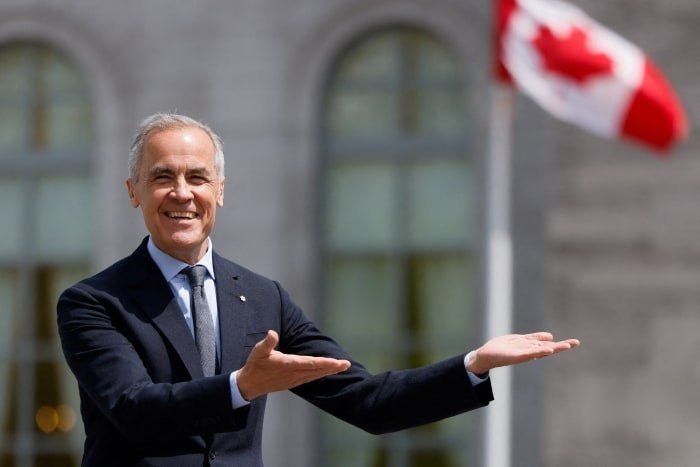
Building directly on the momentum generated during Canadian Prime Minister Mark Carney’s historic visit to Doha in January 2026, the Ottawa summit delivered four major bilateral instruments designed to turn diplomatic goodwill into concrete economic and security outcomes. Most notably, both governments signed a Foreign Investment Promotion and Protection Agreement (FIPA) to safeguard cross-border capital flows and unlock new institutional investments, alongside a formal Protecting Power Arrangement empowering Qatar to assist Ottawa with complex consular matters affecting Canadian nationals in Afghanistan. The two nations also signed Statements of Intent to launch the 2026 Canada–Qatar Year of Culture and to develop a dedicated Memorandum of Understanding on international mediation.
Economic expansion sat at the center of the Ottawa agenda, with officials noting that bilateral merchandise trade surpassed $355 million in 2025 and carries substantial room for growth. Canadian officials highlighted the recent participation of Qatari Finance Minister Ali bin Ahmed Al Kuwari and Qatar Investment Authority Chief Executive Officer Mohammed Saif Al Sowaidi at Prime Minister Carney’s Canada Investment Summit in Toronto in mid-September, underscoring deepening financial ties. Looking ahead, both countries pledged to connect chambers of commerce and private-sector leaders to drive joint ventures in artificial intelligence, digital transformation, infrastructure, and advanced manufacturing.
On the geopolitical front, Minister Anand commended Doha’s indispensable role as a global mediator, while both leaders called for urgent diplomatic de-escalation across the Middle East. Facing heightened maritime tensions, the two ministers jointly reaffirmed their commitment to freedom of navigation and the safe passage of commercial vessels through both the Strait of Hormuz and the Bab el-Mandeb Strait, calling open sea lanes essential to global energy and food security.
Addressing the Israeli–Palestinian conflict, Ottawa and Doha reiterated their backing for a negotiated two-state solution under international law, voicing firm opposition to any annexation of the West Bank and calling for accountability regarding settler violence. Both governments also urged full implementation of United Nations Security Council Resolution 2803 and the Comprehensive Plan to End the Gaza Conflict, stressing the need for sustained ceasefire compliance, the withdrawal of Israeli forces, the demilitarization of Hamas and other armed groups, and unhindered humanitarian aid delivery through the United Nations Relief and Works Agency.
Prime Minister Al Thani also congratulated Canada on successfully co-hosting the FIFA World Cup 2026 earlier this year, praising Canadian hospitality toward international teams and visitors. Following the completion of four thematic working sessions in Ottawa, both nations confirmed that bilateral consultations will continue ahead of the 2027 Strategic Dialogue, including the launch of a fifth thematic track dedicated specifically to defense and security cooperation.