Full articles are free to read through December 10, 2026 (IST). Subscriptions remain available.
By S. Vijay Kumar International Editor | 20th February 2026
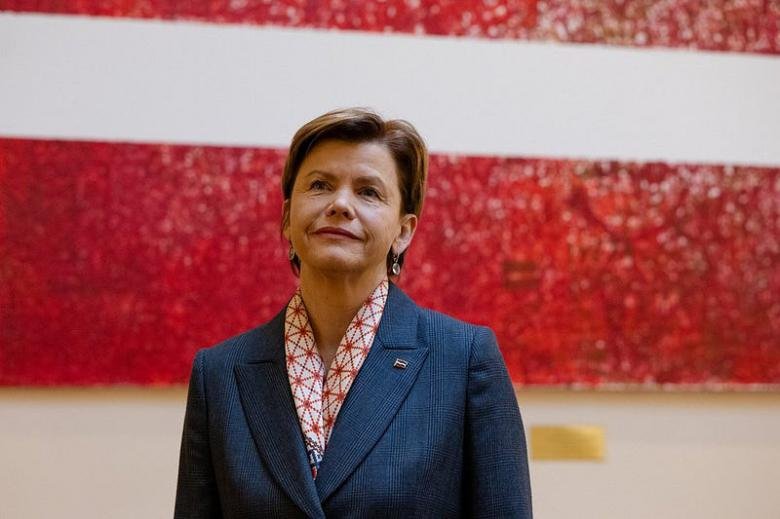
Washington, DC – In a pivotal diplomatic exchange underscoring unwavering Western resolve against Russian aggression, Latvia’s Minister of Foreign Affairs, Baiba Braže, met with Olena Kondratiuk, Deputy Speaker of Ukraine’s Verkhovna Rada, to reinforce the imperative of strengthening Ukraine’s defenses both on the battlefield and at the negotiating table.
Braže, a steadfast advocate for Kyiv’s sovereignty, emphasized that Ukraine must be “well-armed” in every sense to repel Moscow’s onslaught. She insisted that sustained pressure on Russia including extending existing sanctions and swiftly adopting a formidable new package is non-negotiable for achieving a just and lasting peace. The high-level dialogue, held February 18, 2026, in Riga, highlights the deepening alliance between the Baltic states and Ukraine amid escalating tensions in Eastern Europe, where Russia’s invasion has dragged on for years, claiming countless lives and devastating critical infrastructure.
The meeting explored Latvia’s comprehensive support strategy for Ukraine, encompassing military assistance, humanitarian relief, and diplomatic initiatives aimed at isolating Russia globally. Braže and Kondratiuk examined avenues to address Ukraine’s acute energy crisis, worsened by deliberate Russian strikes on power grids that have plunged millions into darkness and cold. Kondratiuk described what she called the harshest winter in a decade, with vulnerable populations elderly citizens and families with young children bearing the brunt of the hardship. In Kyiv and other regions, nearly half the population endures intermittent blackouts, with heating systems crippled by what she characterized as “barbaric” attacks.
This mounting humanitarian crisis, Kondratiuk argued, demands immediate international intervention to prevent systemic collapse that could embolden the Kremlin further. She stressed that resilience on the home front is inseparable from strength at the front lines.
Braže responded with a firm pledge, outlining Latvia’s substantial record of solidarity. Since the outbreak of the war, Riga has provided approximately €1 billion in assistance to Ukraine, supplemented by an additional €1 million in private Latvian donations. Positioning Latvia as one of Ukraine’s most dependable allies, Braže urged all partners to elevate military, political, financial, and humanitarian support to unprecedented levels. “We must ensure that Ukraine not only survives this brutal winter but also holds the line and negotiates from a position of unassailable strength,” she declared, underscoring the strategic necessity of empowering Kyiv to dictate terms rather than succumb to coercion.
Her remarks align with broader NATO sentiment, where concerns over Russian expansionism have galvanized smaller nations such as Latvia haunted by their own histories of Soviet occupation to take a leading role in countering Kremlin aggression.
A key outcome of the discussions was Latvia’s recent decision to allocate €10 million to Ukraine’s NATO Prioritised Ukraine Requirements List (PURL), which targets urgent military shortfalls. This contribution raises Latvia’s total commitment to the initiative to €17.2 million, underscoring its outsized support relative to its population and economic scale. Braže stressed that such investments are critical to equipping Ukrainian forces with advanced weaponry, enhanced intelligence capabilities, and robust logistical support to repel Russian advances.
The talks also addressed coordinated efforts to dismantle Russia’s so-called shadow fleet—clandestine vessels that evade sanctions to transport oil and sustain Moscow’s war machine. Both leaders advocated tighter international regulations and stronger enforcement mechanisms to choke off illicit revenues funding the invasion.
Beyond immediate military and humanitarian aid, the officials charted a course toward long-term accountability. Central to their discussion was the establishment of a Special Tribunal for the Crime of Aggression against Ukraine, intended to prosecute senior Russian officials, including President Vladimir Putin, for orchestrating the invasion. The proposed tribunal would set a modern precedent for international justice, reminiscent of post-World War II accountability mechanisms.
Complementing this initiative is a compensation mechanism designed to seize frozen Russian assets globally and redirect them toward Ukraine’s reconstruction. Braže called for accelerated action, arguing that delayed justice prolongs suffering and undermines international norms prohibiting territorial conquest. Kondratiuk echoed this sentiment, emphasizing that holding Russia financially accountable is essential to rebuilding devastated cities, infrastructure, and livelihoods damages estimated in the trillions of euros.
The conversation also turned to Ukraine’s aspirations for European integration. Braže reaffirmed Latvia’s strong advocacy for Kyiv within the European Union, emphasizing that Ukraine’s path toward membership remains both strategic and achievable despite wartime challenges. Discussions addressed necessary reforms including anti-corruption measures, judicial restructuring, and regulatory alignment with EU standards with both leaders expressing cautious optimism about progress under extraordinarily difficult conditions.
Drawing on Latvia’s own post-Soviet transformation experience, Braže offered technical assistance and political support in Brussels to accelerate Ukraine’s accession process. They agreed that integration into the Euro-Atlantic community would not only solidify Ukraine’s democratic trajectory but also serve as a durable bulwark against Russian influence.
On sanctions, Braže was unequivocal: existing measures must remain in place indefinitely, and a tougher new package should target Russia’s technological imports, financial networks, and elite oligarchic circles with greater precision. She criticized loopholes enabling third countries to circumvent restrictions and called for a unified transatlantic strategy to close enforcement gaps. Kondratiuk commended Latvia’s proactive leadership, noting Riga’s early recognition of Russian threats and its decisive imposition of national sanctions against entities supporting the war.
The leaders advocated enhanced coordination among G7 nations, the EU, and NATO to intensify economic pressure, potentially including secondary sanctions against facilitators in Asia and the Middle East.
The meeting unfolds amid escalating geopolitical strains, including reports of renewed Russian troop concentrations and cyber intrusions targeting Western institutions. Analysts suggest that Moscow’s strategy hinges on exhausting Western resolve and exploiting divisions over continued support for Ukraine. Braže rejected that premise, invoking historical lessons from the 1930s and warning that concessions would invite further aggression against the Baltics, Poland, or beyond.
Kondratiuk shared sobering accounts of civilian endurance amid sustained missile attacks, underscoring what she described as the moral imperative for sustained international backing.
Photographs released by Latvia’s Foreign Ministry capture the solemnity and solidarity of the encounter, reflecting a partnership forged under fire. As winter deepens, the urgency of their message grows clearer: arming Ukraine decisively is not merely a tactical calculation but a strategic necessity for European security.
In Washington, policy observers note that the strengthening Baltic-Ukrainian partnership may influence U.S. deliberations as Congress debates additional assistance for Kyiv. Braže’s appeals echo those of Ukrainian President Volodymyr Zelenskyy, who has repeatedly urged allies to provide advanced air defenses, long-range capabilities, and fighter aircraft without self-imposed restrictions.
Ultimately, the dialogue between Braže and Kondratiuk crystallizes a broader call to action. By reinforcing Ukraine militarily, sustaining sanctions, and advancing mechanisms for justice and reconstruction, Western allies can shape conditions for a durable peace. As Braže concluded, “Pressure on Russia must continue unabated” a principle that may define the next decisive phase of the conflict.