Full articles are free to read through December 10, 2026 (IST). Subscriptions remain available.
By S Vijay Kumar, International Editor | 20th February 2026
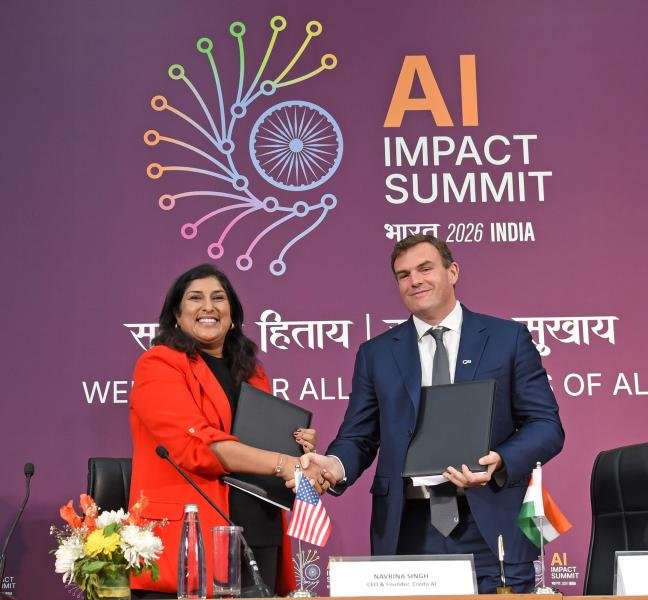
NEW DELHI — There are days in history that feel, even as they are unfolding, like a turning point. February 20, 2026 was one of them. On the fourth and penultimate day of the India AI Impact Summit — the first major gathering of its kind ever held in the Global South — this nation of 1.4 billion people sent an unmistakable signal to the world: it is no longer content to watch the AI revolution from the periphery. India has arrived at the center, and it intends to stay.
The day opened with formal confirmation that India had joined Pax Silica, the US-led coalition for resilient supply chains in critical minerals and AI semiconductors, and closed with political theatrics outside the venue as Indian Youth Congress workers staged a dramatic shirtless protest against Prime Minister Narendra Modi. In between, Google's CEO delivered a keynote that blended corporate strategy with personal homecoming, the IMF's chief issued a ringing endorsement of India's AI democratization agenda, indigenous model-builders pleaded for the country's technological soul, and the AI Impact Expo — already sold out — announced it would extend through February 21 to accommodate the overflow of a world that cannot seem to get enough of what India is building.
Five days, twenty-plus heads of state, representatives from over a hundred countries, and investment pledges that have cumulatively crossed $260 billion: the India AI Impact Summit has by any measure been the most consequential technology event of 2026. Thursday, its fourth day, was its most crowded and arguably its most consequential chapter yet.
INDIA JOINS PAX SILICA: A DIGITAL-AGE ALLIANCE IS SEALED
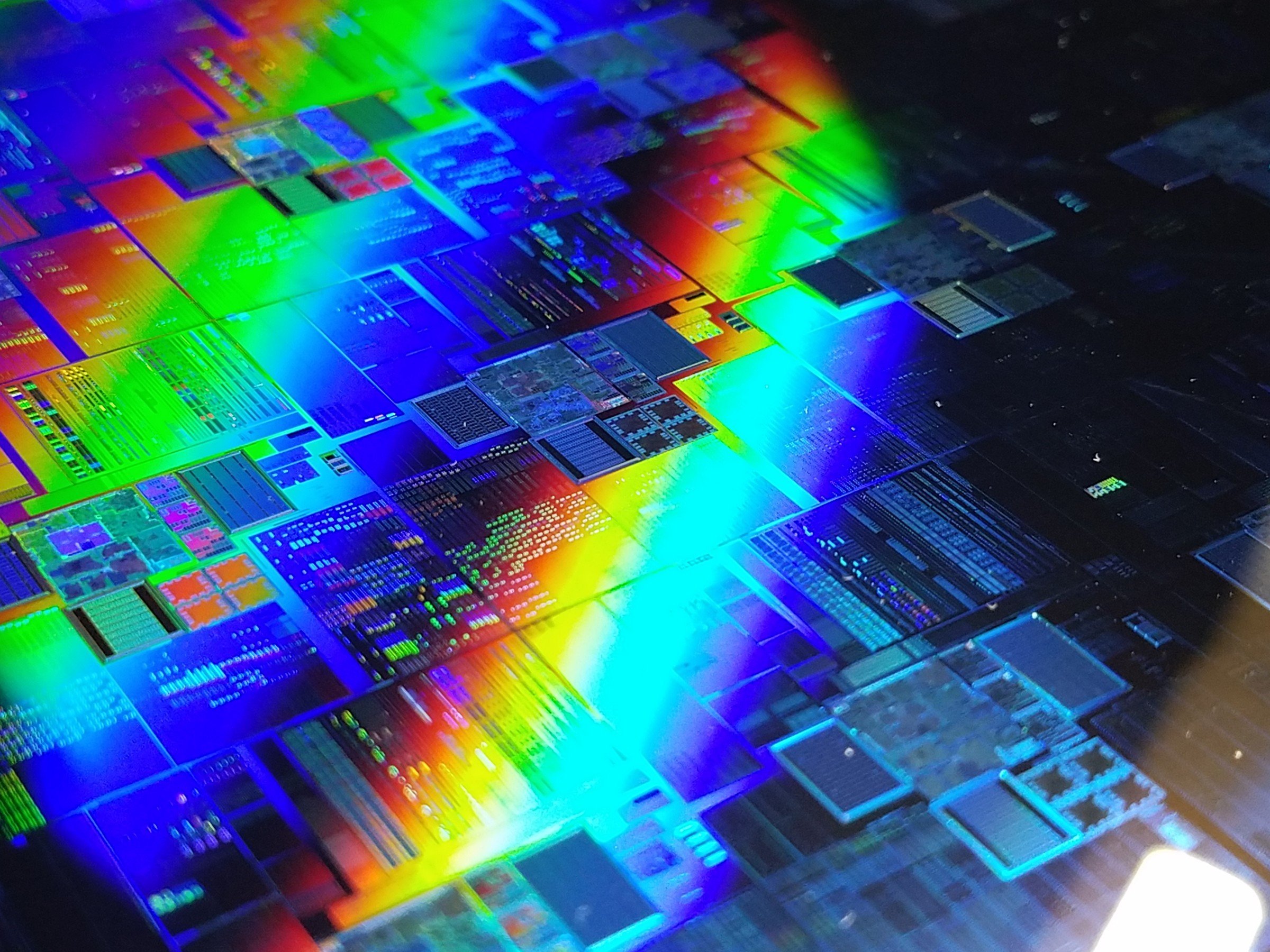
The morning's most consequential announcement came not with fanfare but with a signed document and a measured press conference. Union Minister Ashwini Vaishnaw confirmed that India had formally acceded to Pax Silica, the United States-led coalition designed to safeguard global supply chains for critical minerals and the semiconductors that power modern AI. The move, long anticipated in policy circles, was described by Vaishnaw as a foundational step in cementing India's role as a trusted international technology partner and in building out the semiconductor ecosystem that every other element of India's AI ambition depends upon.
The timing is deliberately strategic. As global geopolitics grows increasingly shaped by who controls the chips and the minerals that make them possible, India's formal membership in Pax Silica places it squarely within the architecture of the Western-led technology alliance — an architecture that matters as much today as any military or trade treaty of the 20th century. In a single signature, India announced that it understands the game being played, and that it intends to be a player of consequence rather than a spectator.
Vaishnaw, who has emerged as the summit's dominant government voice, reinforced the announcement with a broader articulation of India's 'whole-of-nation' AI strategy. The country's IndiaAI Compute Portal already manages a base of 38,000 GPUs, he noted, with plans to add more than 20,000 additional units. His governing mantra — 'frugal, sovereign and scalable' — has become the unofficial slogan of India's technology policy moment: a three-word philosophical position that manages to acknowledge resource constraints, assert independence, and promise ambition all at once.
SUNDAR PICHAI COMES HOME — AND COMES BEARING GIFTS
There are few moments in modern geopolitics as symbolically potent as a Silicon Valley CEO of Indian origin standing before the country that shaped him to announce transformative investment. When Google's Sundar Pichai took the stage at Bharat Mandapam on Thursday, he was not merely a technology executive presenting a corporate roadmap. He was, in the eyes of many in the hall, living proof of what India produces — and a messenger bearing the gifts of what it can now receive in return.
Pichai's keynote was a meticulously crafted love letter to the US-India technology relationship, written in the language of fiber optics, cloud clusters, and renewable megawatts. He announced the construction of new subsea fiber optic cables to dramatically strengthen India's digital connectivity with the rest of the world — infrastructure that is as much about sovereign data corridors as it is about bandwidth. He unveiled a strategic partnership with Reliance Jio for new cloud computing clusters, and confirmed Google's participation in a 50-megawatt renewable energy project in Rajasthan, anchoring the AI revolution's energy demands firmly in the green transition.
He also spoke expansively on plans for AI infrastructure development across India, casting Google not as a vendor but as a long-term co-builder of the country's digital future. His personal reflections — on India's extraordinary growth trajectory, on the distance between the country he once left and the one he sees today — carried the weight of someone who understands that these are not merely business decisions. They are acts of faith in a country's potential.
In a moment that briefly dominated social media more than any investment figure, Pichai was photographed pausing on the exhibition floor to savor a cup of local filter coffee. It was a small, human moment — the kind that corporate communications teams could not have scripted — and it resonated precisely because it could not. Behind every megadeal, after all, is simply a person who remembers where they come from.
THE VOICES THE SUMMIT NEEDED: GEORGIEVA, RAGHAVAN, AND LECUN
If the morning belonged to geopolitics and the mid-day to corporate announcements, Thursday afternoon was claimed by ideas — and by the people who had the clarity and the courage to articulate them without diplomatic softening.
IMF Managing Director Kristalina Georgieva opened her remarks by thanking Prime Minister Modi personally for making AI democratization not merely a theme of this summit but its governing philosophy. In a gathering that might easily have been dominated by the priorities of wealthy nations and powerful corporations, India has chosen — stubbornly and consistently — to frame every conversation around inclusion, equity, and access. Georgieva's endorsement of that framing, delivered from one of the world's most powerful economic pulpits, was not a small thing. It was a validation that the world's leading financial institutions see India's inclusive AI vision not as idealism, but as sound economics.
Sarvam AI co-founder Vivek Raghavan provided the day's most electrically charged intellectual moment. In a room full of foreign CEOs pledging Indian investments, Raghavan stood up and said what many in the domestic technology community had been thinking: that the ability to consume AI built elsewhere is not the same as the capacity to build it yourself, and that the difference between those two things is the difference between a technology-enabled country and a digital colony. His company had earlier unveiled a new generation of large language models — including 30-billion and 105-billion parameter architectures built on a mixture-of-experts framework, alongside text-to-speech, speech-to-text, and vision models — as direct evidence that India can do the hard foundational work, not just the application layer on top of it.
The phrase 'digital colony' landed in the hall like a stone dropped into still water. The ripples are still spreading. Raghavan was not attacking the foreign investment that has flooded into India this week. He was drawing a distinction that this country must internalize: welcome the capital, but do not mistake it for capability. Build the models. Train them on Indian languages. Shape them with Indian values. Otherwise, all the GPUs in the world will simply make India a more efficient consumer of someone else's intelligence.
Meta's former chief AI scientist Yann LeCun, who has spoken earlier in the summit, added a complementary dimension to this argument, calling for dramatically increased investment in India's research institutions and urgent policy action to stem the brain drain that continues to send the country's finest AI minds to laboratories in the United States and Europe. Together, LeCun and Raghavan constructed a portrait of a nation that knows what it can do, is frustrated by the structural forces that have historically prevented it from doing it, and is running out of patience with those constraints.
SHAKTI CLOUD, $260 BILLION, AND THE ARITHMETIC OF AMBITION
The sheer scale of financial commitment announced at this summit defies easy summary, but an attempt must be made. NVIDIA's partnership with Yotta to build Shakti Cloud — a sovereign AI computing infrastructure driven by more than 20,000 NVIDIA Blackwell Ultra GPUs — represents not just a commercial deal but a statement of strategic intent. The name Shakti, Sanskrit for power, was chosen with full awareness of its resonance. India is building the computational power to think for itself.
Adani Group has pledged $100 billion to construct AI data centers powered entirely by renewable energy by 2035, with an additional $150 billion in downstream related investments anticipated. Reliance and Jio have committed $110 billion over seven years for AI infrastructure. Microsoft confirmed it remains on course to deploy $50 billion globally by the end of the decade, with India as a priority destination. Blackstone moved in to secure a majority stake in Indian AI startup Neysa through a $600 million equity fundraise — a move that signals the maturity of India's AI startup ecosystem to the most sophisticated institutional investors in the world.
Taken together, these commitments represent one of the largest coordinated investment surges into any single nation's technology sector in recorded history. The question that will matter most in ten years is not whether the money arrived — it clearly has — but whether the ecosystem that receives it is capable of converting capital into genuine, lasting, sovereign capability. The signals from this summit suggest that India is building exactly that ecosystem. Whether it succeeds will depend on decisions made in the years ahead.
100 MILLION USERS, A WORLD RECORD, AND AN EXPO THAT COULD NOT CONTAIN ITSELF
OpenAI CEO Sam Altman's disclosure that ChatGPT now serves 100 million weekly active users in India — a figure he unveiled at this summit — is a statistic that demands to be held for a moment before moving on. India has become the single largest active user base for the world's most prominent consumer AI product. That is not a prediction about the future. It is a description of the present, and it fundamentally reframes the question of what AI democratization actually looks like when it is working. Altman did not need to make a speech about India's potential. The number made it for him.
India also entered the record books this week in a different register: 250,946 valid pledges were received for an AI responsibility campaign in just 24 hours between February 16 and 17, earning a Guinness World Record for the most pledges received for an AI responsibility initiative in a single day. The number invites debate — critics may call it performative, a social media mobilization dressed up as civic engagement. Supporters will argue that it represents something genuinely new: a popular, bottom-up consciousness around the ethics and responsibilities of AI that no other country has attempted to cultivate at this scale. Both interpretations are probably right, and the tension between them is itself a healthy sign.
The AI Impact Expo, extended through February 21 following overwhelming public demand, features over 300 exhibitors from more than 30 countries spanning the full spectrum from ethical AI frameworks to sustainable computing hardware. Among the exhibits drawing the most sustained attention is The E Plane Company's AI-powered air taxi — an e-VTOL prototype developed in collaboration with IIT Madras that serves as a tangible, hovering symbol of the kind of applied indigenous innovation this summit was convened to celebrate. It is not a prototype of the future. It is a prototype of a future India is actively building.
MANAV, EUROPE, AND THE GEOPOLITICS OF INCLUSION
Prime Minister Modi's MANAV Vision — Moral, Accountable, Nuanced, Accessible, and Verifiable AI — has served as the summit's philosophical north star. It is an attempt, serious and substantive, to articulate what ethical AI governance means in a society of extraordinary complexity: a country where a Nobel laureate and a subsistence farmer may both, in the same year, interact with AI systems, and where the stakes of getting those interactions right are quite literally a matter of life and dignity.
The summit's governing theme, 'People, Planet, Progress,' has been more than decorative language. It has structured the entire five days around a core proposition: that the AI revolution is only legitimate if it serves people at the margins, not just people at the top. India, with its digital public infrastructure — Aadhaar, UPI, ONDC, and the broader DPI stack — has more practical experience than almost any other country in deploying technology at billion-person scale with inclusion as a design principle rather than an afterthought.
Geopolitically, the summit has been a series of quiet coups. The strong European turnout — notably amplified by the recent EU-India Free Trade Agreement — has added a crucial third vector to what might otherwise have been a bilateral US-India technology story. With the United Nations lending its endorsement, the IMF offering its validation, Europe bringing its regulatory sophistication, and the United States its capital and chips, India finds itself at the center of a genuinely multilateral AI conversation for the first time. It is, to put it plainly, exactly where India has been trying to position itself for years.
PROTESTS, ROBOT DOGS, AND THE PRICE OF SPECTACLE
No event of this magnitude passes entirely without friction, and the India AI Impact Summit has not been exempt. The day's most politically charged moment came when Indian Youth Congress workers staged a shirtless protest against Prime Minister Modi outside Bharat Mandapam — a theatrical act of dissent that resulted in the detention of at least ten demonstrators and a sharp, swift exchange between BJP and Congress. Union Minister Piyush Goyal condemned the action as emblematic of what he called 'Congress arrogance,' while the opposition defended it as legitimate political expression. Whatever one's sympathies, the protest was a useful reminder that the politics of India do not pause, even for the most historically significant technology conference the country has ever hosted.
Earlier in the week, Bloomberg reported that foreign delegates had been left stranded without food or water during a security lockdown mounted ahead of PM Modi's visit on Wednesday — a logistical failure that became the summit's most embarrassing headline and a sobering counterpoint to India's ambitions of world-class hosting. For a gathering staking considerable national prestige on India's organizational capability, the incident was an unwelcome note in an otherwise triumphant score.
A more distinctly absurdist controversy involved Galgotias University, whose representative presented a commercially available robot dog as an indigenous Indian innovation — a claim debunked within hours online and met with the particular savagery of technical communities on social media. It was, in the grand sweep of the summit, a footnote. But it carried a useful lesson: India's genuine AI achievements this week have been extraordinary. The country does not need to embellish them. Authenticity, in technology as in life, is not optional.
A SUMMIT THAT REDREW THE MAP
As the India AI Impact Summit prepares for its final day on February 21 — with the expo extended to accommodate a world that cannot seem to get enough — it is worth pausing amid the avalanche of announcements to ask what has actually changed. The answer, this correspondent believes, is something significant: the mental geography of global AI has shifted.
For years, the AI conversation has been structured as a dialogue between two powers — the United States and China — with Europe offering regulatory interjections from the sidelines and the Global South appearing primarily as a market to be captured or a population to be served. This summit has broken that structure. India has inserted itself not as a supplicant seeking investment or a consumer seeking access, but as a co-author of the AI story — one with its own foundational models, its own compute infrastructure, its own philosophical framework, and its own billion-person proof of concept.
The investments are real. The partnerships are signed. The models are being trained. The infrastructure is being built. And crucially, the conversation about what kind of AI the world should have — frugal, sovereign, scalable, moral, accessible, verifiable — is now being shaped, in part, from New Delhi. That is a change that will outlast any single summit.
Tomorrow, the India AI Impact Summit concludes. The work it has set in motion — the agreements to be honored, the models to be trained, the infrastructure to be built, the talent to be retained, the digital colonies to be refused — is just beginning.