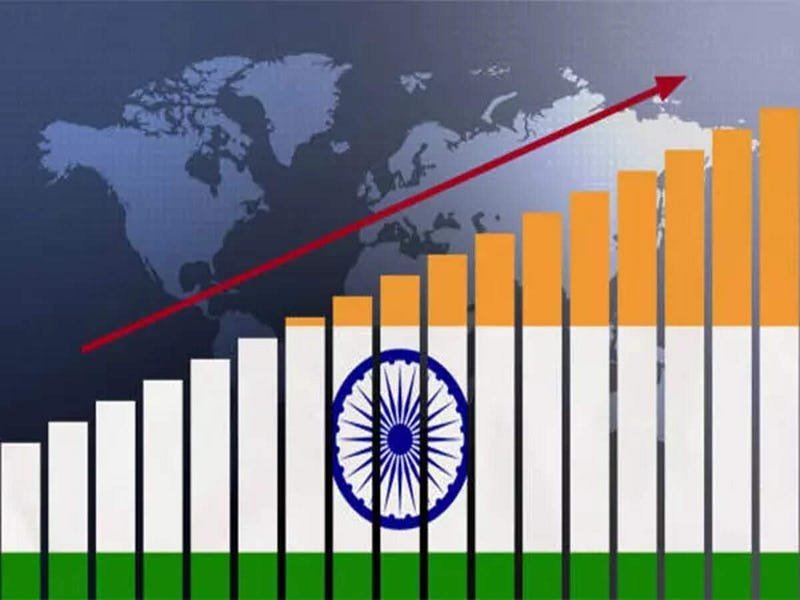
NEW DELHI, India — India’s economy is poised to defy persistent global headwinds with real GDP growth projected between 7.2 percent and 7.4 percent in fiscal year 2027, anchored by a historic twelve-year transformation that lifted an estimated 496 million people out of poverty, according to the November 2026 edition of EY Economy Watch released on Friday. Examining India's macroeconomic resilience alongside trends in inflation, trade, investment, and domestic consumption, the report highlights how sustained expansion and targeted welfare delivery have cemented India's position as the fastest-growing major economy while maintaining comparatively low income inequality.
Data featured in the report’s In Focus analysis reveals that India’s poverty headcount ratio—measured at the lower-middle-income threshold of $4.20 per person per day in purchasing power parity—plunged from 57.7 percent in 2011 to 16.1 percent in 2023. Over that same period, extreme poverty measured at $3.00 per day dropped dramatically from 27.1 percent to just 2.6 percent. Beyond monetary income gains, broader human development metrics tracked by the Oxford Poverty and Human Development Initiative show India’s multidimensional poverty rate falling from 53.8 percent in fiscal year 2006 to 16.4 percent by 2019–21, reflecting widespread improvements in healthcare access, education, and household living standards.
A surge in labor market participation served as a primary engine behind these socioeconomic gains. Between 2017 and 2023, the Indian economy generated roughly 134 million jobs, expanding employment at nearly double the growth rate of the country’s working-age population, with rural women accounting for a substantial share of the workforce increase. EY analysts note that rising per capita GDP, steady domestic consumption, and expanded social transfers and food subsidies worked in tandem to elevate household purchasing power across both urban centers and rural districts.
Near-term economic momentum remains equally firm heading into the second half of the current fiscal year. Strong merchandise and service exports paired with resilient industrial output are estimated to have powered robust expansion throughout the second quarter of FY27. Looking further ahead, World Bank projections cited in the report indicate that India’s extreme poverty rate at $3.00 per day will edge down even further to 2.2 percent by FY29, while the broader $4.20 daily poverty rate is forecast to decline to 12.1 percent.
To safeguard these hard-won gains and keep millions of near-poor households from slipping backward, EY economists emphasize that policymakers must prioritize the creation of high-productivity jobs alongside sustained public capital expenditure. Containing inflation in essential food and household items while reinforcing rural income support will remain critical to ensuring India’s high-growth trajectory translates into durable, inclusive prosperity through the end of the decade.