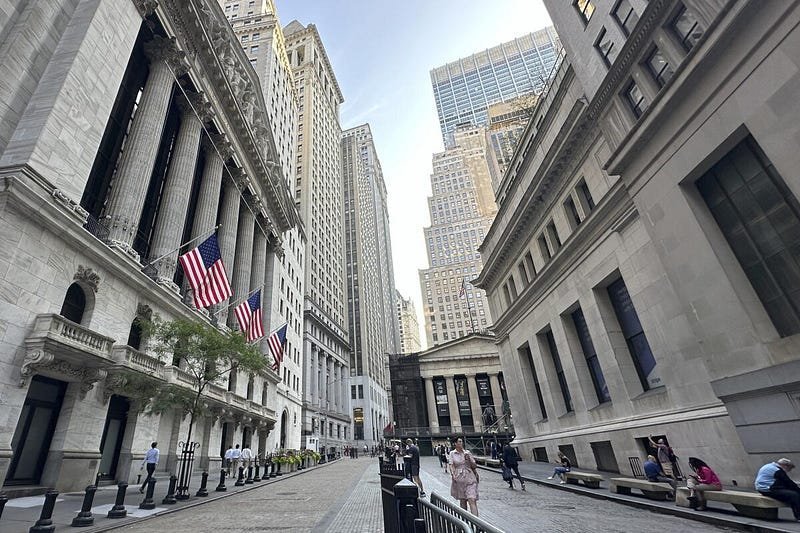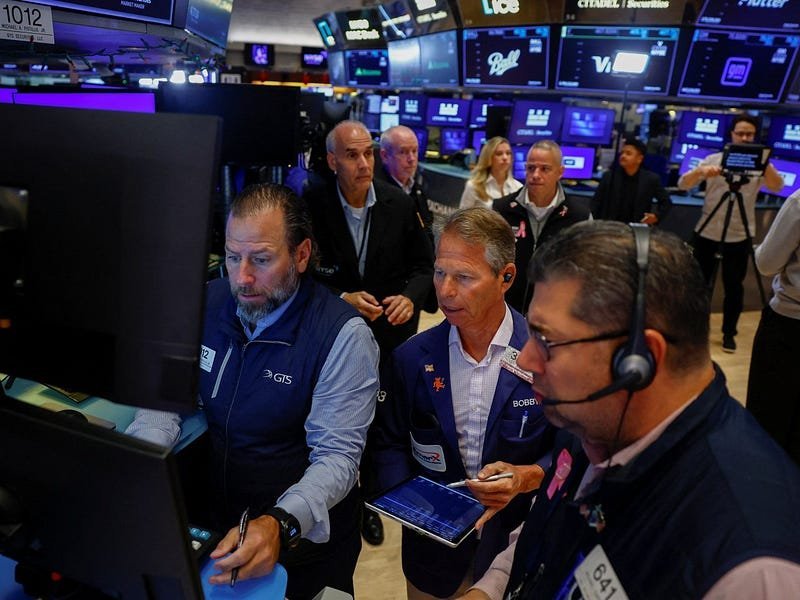
NEW YORK / FRANKFURT / TOKYO, — Global financial markets are staging a synchronized recovery heading into Friday's shortened post-Thanksgiving trading session on Wall Street, propelled by a rebound in battered artificial intelligence equities, historic central bank leadership news in Europe, and sharp moves across global energy and trade corridors. Ahead of the opening bell in New York on November 27, 2026, U.S. stock index futures pointed firmly higher, with Nasdaq 100 futures jumping 2.2 percent and S&P 500 futures climbing 1.4 percent as investors stepped back into technology shares following weeks of intense volatility triggered by Anthropic's $81 billion market debut and dramatic executive turbulence at Nvidia. Across Europe and Asia, equities built on strong momentum, with Germany's DAX advancing 1.8 percent, Britain's FTSE 100 adding 1.3 percent, Japan's Nikkei 225 rising 0.7 percent to 57,919.30, and South Korea's Kospi surging 2.2 percent to 4,812.65. \
In European monetary policy, eurozone leaders reached a landmark consensus to appoint former Bank of Spain Governor [Pablo Hernández de Cos as the next president of the European Central Bank, making him the first Spaniard to lead the institution when Christine Lagarde steps down in February 2027. Endorsed ahead of formal European Council ratification next month alongside executive board nominees Laurence Boone and Markus Brunnermeier, Hernández de Cos will inherit a complex economic landscape marked by 4 percent eurozone inflation—double the central bank's target—and heightened sovereign bond market tension driven by French fiscal deficits. Financial markets welcomed the selection as a signal of institutional continuity, even as Treasury yields rose globally and benchmark 10-year U.S. notes climbed to 4.90 percent alongside a modest cryptocurrency recovery that lifted Bitcoin back toward $60,600. \[
Corporate governance and global trade policy remain at the forefront of institutional investor scrutiny across Washington and major financial capitals. On Wall Street, S&P Global Ratings placed Nvidia's credit rating on CreditWatch Negative due to heightened management and board oversight risks following Jensen Huang's sudden departure and rapid reinstatement as chief executive earlier this week, while sources indicated Nvidia has instructed buyers to bar Chinese cloud renters from accessing its advanced graphics processors. Simultaneously, global corporations and sovereign trade ministries are scrambling to assess the Trump administration's newly unveiled Section 301 tariff salvo slated for January 2027—which threatens 15 to 35 percent levies on partners including China, the European Union, Vietnam, and Switzerland—even as fresh data from Beijing showed Chinese industrial profit growth accelerating to a five-month high of 20.1 percent in October.
Energy and commodity markets are simultaneously navigating acute cross-currents as Middle East hostilities clash with shifting fuel demand. Brent crude oil surged more than 2 percent above $96 per barrel—heading for its first weekly gain of November following fresh attacks on commercial shipping and energy infrastructure in the Persian Gulf—even as European diesel futures tumbled nearly 30 percent from their early-war peak to offer manufacturers and logistics operators partial cost relief. For global institutional investors, corporate treasurers, and central bankers closing out November, the convergence of AI valuation discipline, looming U.S. tariffs, and volatile oil prices sets the stage for a decisive final stretch of 2026.