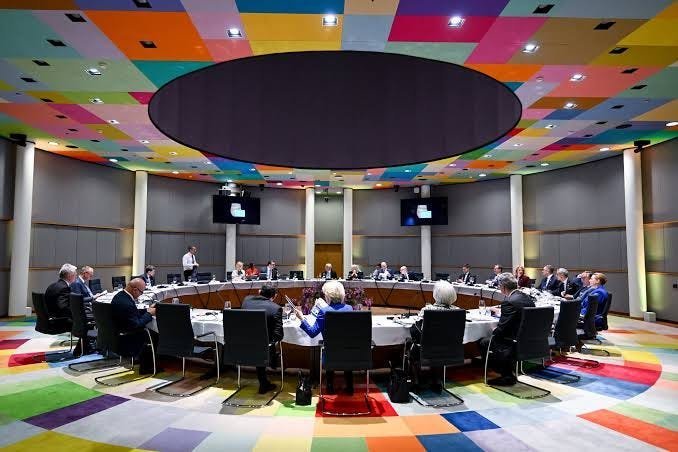
BRUSSELS , — A major institutional showdown is unfolding in Brussels as European Union heads of state and government gather for a special two-day European Council summit on November 26 and 27, 2026, to negotiate the bloc's 2028–2034 multiannual financial framework and long-term financial aid for Ukraine. Ahead of European Parliament President Roberta Metsola's formal address to national leaders on Thursday morning, senior lawmakers and European Commission officials issued a forceful rejection of European Council President António Costa's compromise budget blueprint, warning that capping spending at 0.97 percent of the EU's gross national income (GNI) represents a historic low that would weaken European defense, economic competitiveness, and global influence.
During an intense plenary debate on November 25, 2026, European Budget Commissioner Piotr Serafin joined key parliamentary negotiators in dismantling claims that the proposed seven-year spending plan expands financial capacity, pointing out that once inflation is factored in, President Costa's draft leaves the Union with a smaller real-terms budget than the 1.11 percent GNI framework agreed upon in 2020. Parliament's budget co-rapporteur Siegfried Mureşan warned national leaders that prime ministers cannot dictate an undersized budget to lawmakers, emphasizing that securing an absolute parliamentary majority for consent is harder than ever and will fail unless deep cuts to security, research, agriculture, and external global aid are reversed. Co-rapporteur Carla Tavares echoed that alarm, insisting that member states cannot demand stronger European defense, housing affordability solutions, and industrial competitiveness while simultaneously slashing the common resources required to fund them.
At the center of the budgetary standoff is a fierce debate over new revenue streams designed to pay for European priorities without overburdening national treasuries or traditional farm and cohesion subsidies. While Parliament's own resources co-rapporteurs Danuše Nerudová and Sandra Gómez López welcomed President Costa's decision to incorporate lawmakers' proposals for new European levies on digital tech giants, crypto-assets, and online gambling, they demanded binding legislative commitments rather than vague future promises. Nerudová specifically called out major American technology platforms profiting across the European single market, arguing that multinational digital giants must pay their fair share rather than leaving European citizens and traditional businesses to shoulder the fiscal burden.
For transatlantic policymakers, global financial markets, and U.S. technology and defense firms watching from Washington, the outcome of the November 26–27 Brussels summit carries far-reaching consequences. How EU leaders resolve the clash between national fiscal restraint and collective investment will directly shape Europe's capacity to sustain military and economic support for Ukraine, fund continental defense procurement, and enforce new digital taxation on American tech companies heading into 2027.