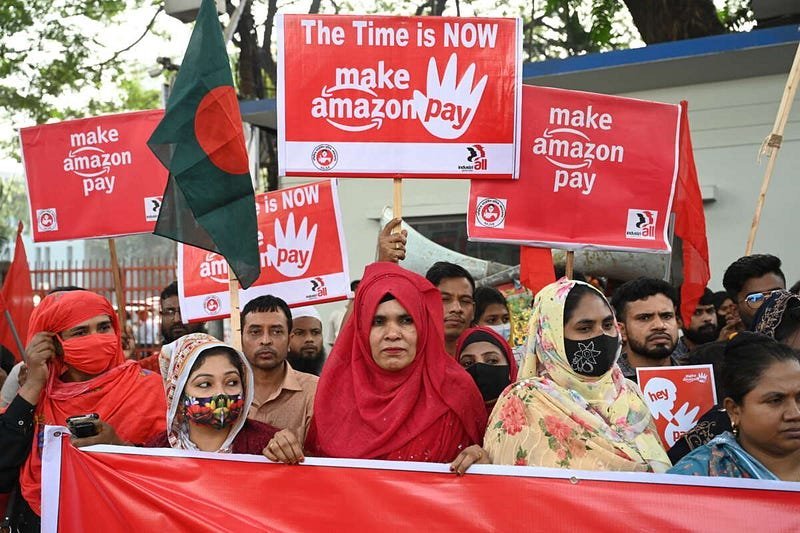
WASHINGTON, D.C. — Warehouse employees, fulfillment center staff, and delivery drivers across major international logistics hubs staged coordinated strikes and workplace protests on Black Friday, challenging Amazon during the busiest shopping corridor of the year. Organized by a global coalition of labor unions and worker advocacy networks under the annual Make Amazon Pay campaign, the demonstrations targeted key distribution nodes across the United States and Europe to demand higher living wages, safer fulfillment floor conditions, and strict limits on automated algorithmic monitoring.
Labor organizers from Seattle and New York to major European logistics centers in Germany, the United Kingdom, and France argued that record holiday order volumes come at a steep human cost. Workers highlighted grueling productivity quotas enforced by handheld scanners and automated tracking software, contending that algorithmic pace-setting increases workplace injury rates while penalizing employees for brief rest breaks. Union leaders called on Amazon executives to recognize collective bargaining rights and reinvest a fairer share of surging e-commerce and cloud computing profits into frontline compensation.
Amazon management maintained throughout Friday’s protests that customer deliveries continued without widespread disruption across its global fulfillment network. Company spokespeople emphasized that Amazon already provides competitive starting wages, comprehensive healthcare benefits from day one, and ongoing investments in workplace safety technology, while dismissing union claims regarding warehouse working conditions as misleading.
For U.S. policymakers and retail supply chain analysts, the coordinated Black Friday walkouts underscore intensifying labor friction across the digital economy as artificial intelligence and automated logistics reshape modern warehousing heading into 2027.