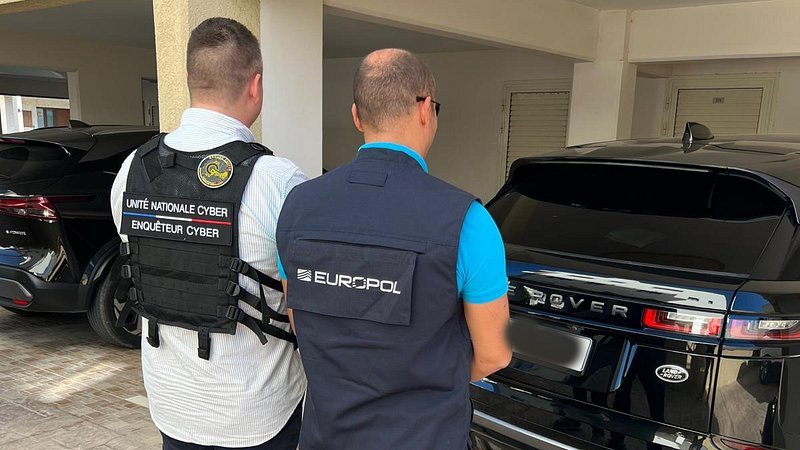
LYON, France , — International law enforcement agencies arrested 65 individuals, including high-priority terrorism suspects and transnational organized crime operatives, during a sweeping INTERPOL-coordinated border security crackdown across Europe, North Africa, and the Middle East, the global policing body announced on Thursday, November 26, 2026. Executed under Operation Neptune VIII with operational support from the European Border and Coast Guard Agency (Frontex), the coordinated sweep mobilized frontline officers across 18 countries to conduct more than 41 million real-time searches against INTERPOL's global databases, generating 395 positive hits, including 89 directly tied to terrorism-related offences through international Notices and Diffusions.
High-stakes counter-terrorism interceptions across North Africa and Southern Europe underscored the reach of real-time cross-border intelligence sharing. In Algeria, police tracked and arrested a suspected member of a terrorist organization wanted internationally under an INTERPOL Red Notice following vital intelligence exchanged between Algerian and Italian authorities. In Tunisia, border officials intercepted a terrorism suspect wanted for providing logistical support after flagging his name on the passenger manifest of a maritime vessel arriving from Italy, a suspect linked to both an INTERPOL Diffusion and an urgent Orange Notice warning of an imminent threat. Meanwhile, at Tirana's Rinas Airport in Albania, border officers arrested a woman wanted by Türkiye under an INTERPOL Red Notice following her conviction for terrorist organization membership, while also identifying individuals flagged under terrorism-related Blue Notices and a United States Diffusion concerning a suspected foreign terrorist fighter.
Beyond immediate arrests, Operation Neptune VIII yielded an expansive trove of actionable intelligence for Western and international security services monitoring extremist travel corridors. Participating countries logged 281 additional terrorism-related hits through national registries and the Schengen Information System (SIS), enabling investigators to map clandestine transit routes and update 19 terrorism-related Blue Notices alongside a targeted Diffusion. INTERPOL Counter-Terrorism Director Maria Carmen Munoz emphasized that terrorist networks routinely exploit jurisdictional gaps between nations, noting that integrating global policing databases directly into routine air, sea, and land border checks disrupts illicit movement and arms investigators with critical leads.
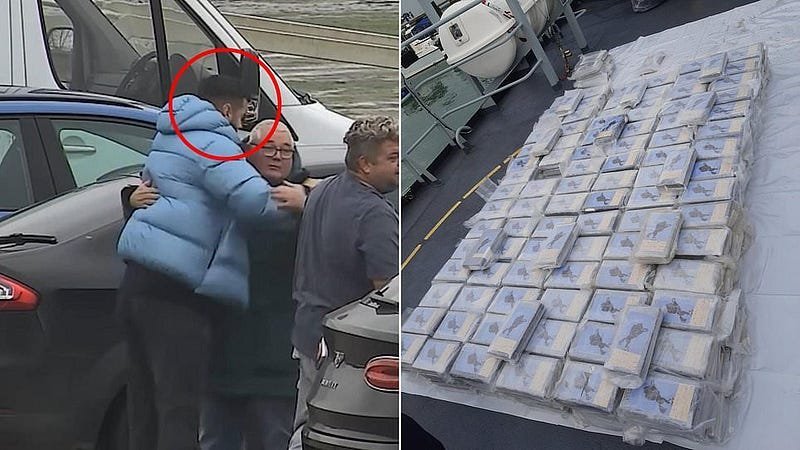
The Mediterranean sweep also dismantled multiple transnational criminal smuggling operations involving forged travel documents, stolen vehicles, and narcotics trafficking. At Ljubljana Airport in Slovenia, border authorities detained two travelers carrying forged Indian passports and Spanish visas, sparking an immediate investigation into their true identities and potential links to foreign terrorist fighter networks. In a separate maritime corridor operation between Italy and Algeria, INTERPOL and Frontex officers uncovered a North African vehicle trafficking route after identifying three vehicles with altered vehicle identification numbers, while airport authorities in Portugal arrested two drug trafficking suspects following the seizure of roughly 290 kilograms of cocaine.
Bringing together law enforcement agencies from Albania, Algeria, Bosnia and Herzegovina, Bulgaria, Croatia, Cyprus, France, Greece, Italy, Jordan, Lebanon, Malta, Montenegro, Morocco, Portugal, Slovenia, Spain, and Tunisia, Operation Neptune VIII highlights the growing necessity of synchronized maritime and aviation border surveillance for European, Middle Eastern, and American national security interests. As extremist groups and organized crime syndicates increasingly rely on fraudulent documentation and commercial sea routes across the Mediterranean basin, real-time database interoperability remains a decisive front line in global counter-terrorism enforcement.