
US Election Stories 2026 · 13
Byron Donalds Wins Florida Governor's Race as Republicans Salvage a Southern Stronghold on a Bruising Night
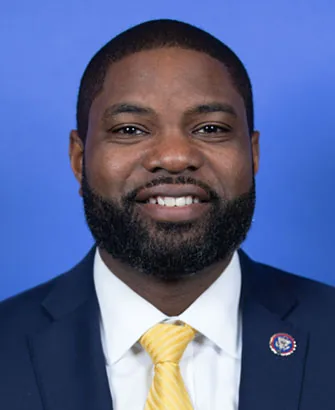

Washington, November 3, 2026 — The Republican National Committee has congratulated Byron Donalds on his victory in Florida's gubernatorial race, offering a rare note of celebration for the party on a night when Democrats captured the House, reclaimed the Senate, and broke through in states across the heartland. In a statement issued Tuesday evening, RNC spokeswoman Emma Hall declared Donalds the Sunshine State's next governor and credited him with continuing the conservative stewardship that she said has made Florida the best place to live, work, and raise a family.
Hall's statement framed the result as a validation of commonsense conservative governance and predicted that Donalds will deliver historic wins for families, workers, seniors, veterans, and small businesses across the state. The message was carefully calibrated to project confidence and continuity at a moment when the national tide was running hard against the Republican Party. Florida, the largest and most consequential swing state in the country, remains in Republican hands at the executive level, and the party will lean heavily on that fact as it seeks to regroup after losses that have reshaped the balance of power in Washington.
Donalds's victory carries particular historical weight. A Black conservative who rose from humble beginnings in Brooklyn to become a prominent voice in the House, he will now lead a state that has become a magnet for Americans seeking lower taxes, fewer regulations, and a warmer climate. His win cements Florida's status as the center of gravity for the modern Republican Party, a place where the coalition assembled by Trump has found its most durable expression. The governor-elect campaigned on a platform of economic opportunity, school choice, public safety, and resistance to federal overreach, themes that resonate deeply in a state that has absorbed hundreds of thousands of new residents from across the country and beyond.
The result also reflects the sharp regional divide that has come to define American politics. While Democrats made gains across the Midwest and even in traditionally Republican states like Kansas, Florida remained reliably red at the statewide level, insulated by a growing population of retirees, Cuban and Venezuelan American voters in South Florida, and a business community that has thrived under low-tax policies. Donalds's victory suggests that the Republican Party's hold on the Sunshine State is structural rather than cyclical, and it provides the party with a platform from which to rebuild its national brand after a devastating midterm.
For Democrats, the Florida outcome is a reminder that the blue wave had limits. The party's gains in the House and Senate were substantial and historic, but it failed to penetrate the most consequential battleground in the South. That failure will prompt soul-searching about messaging, outreach, and investment in a state that Democrats once considered a toss-up. For Republicans, Donalds's win offers a measure of consolation and a model for the future. A diverse, articulate, and telegenic conservative who can speak to working-class voters of all backgrounds is precisely the kind of figure the party will need as it seeks to broaden its coalition and compete in a changing electorate.
As Donalds prepares to assume office in Tallahassee, the national spotlight will follow him. Florida remains a crucial state in the electoral calculus of both parties, and his success or failure will shape the narrative for Republicans seeking to rebuild trust after a painful defeat. The RNC's statement was brief and celebratory, but its significance extends far beyond the Sunshine State. In a night of Democratic triumph, Florida stood as a Republican redoubt, and Byron Donalds now carries the hopes of a party determined to prove that its hold on the American South remains unbroken. The world will be watching as he takes office and begins the work of governing a state that has become a laboratory for conservative policy and a bellwether for the nation's political future.