
EXCLUSIVE SPECIAL STORY US MID TERM ELECTION 2026
America Votes in the Shadow of War and Code: The Two Hidden Stories That Will Define Election Day 2026
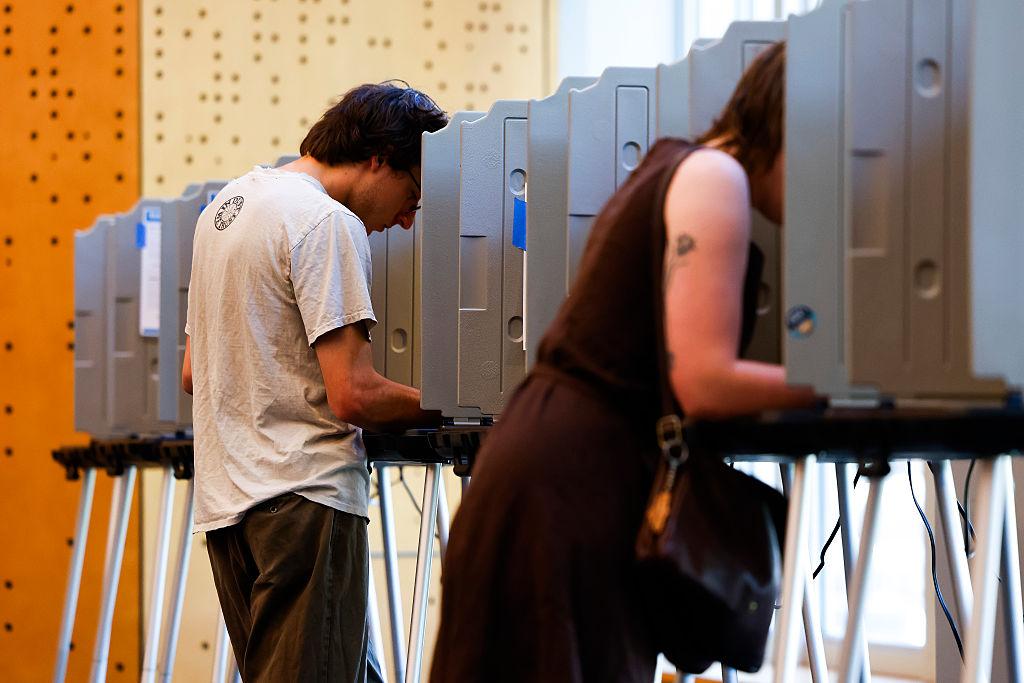
WASHINGTON — On the morning of November 3, 2026, as hundreds of millions of Americans head to the ballot boxes from Anchorage to Miami, two profound transformations are unfolding beneath the surface of the midterm narrative. One is political and largely unreported. The other is technological and almost entirely invisible. Together they form the true story of this election, a story that no major outlet has fully told.
While mainstream media networks focus exclusively on physical polling queues, partisan rhetoric, House and Senate control, ballot measures, and the fate of President Trump’s legislative agenda, a deeper reality is taking shape. This election has become an unofficial national referendum on a war that Americans were never formally asked to approve. And at the same time, a sophisticated international architecture has been quietly activated to insulate the global economy from the immediate fallout of a contested vote.
The Hidden Referendum
The war with Iran, now in its second year, has driven gas prices to levels that have made the simple act of filling a tank a daily reminder of distant conflict. It has pushed inflation into territory that has exhausted the patience of working families. And it has done so without a congressional authorization for the use of military force, a constitutional technicality that has become the elephant in the room of American politics.
What makes this election genuinely unprecedented is not simply that voters are angry about the cost of the war. It is that they are beginning to understand, in ways that no poll has fully captured, that this election is the only mechanism available to them to express a verdict on a conflict that their representatives never voted to endorse.
The evidence for this reading lies in the granular data of early voting and in the geography of turnout. In the Senate battlegrounds that will decide control of the upper chamber, early ballots have already surpassed the total cast in 2022, with registered Democrats holding a significant advantage in the states that report party affiliation. But the more revealing pattern is where that enthusiasm is concentrated.
In Maine, where Democratic nominee Troy Jackson has made surging heating oil costs the centerpiece of his challenge to Senator Susan Collins, the connection between the war and the price of keeping a home warm is not abstract. In Kansas, a state that has not elected a Democrat to the Senate since 1932, the race has tightened precisely because the war’s economic fallout has reached communities that normally tune out foreign policy. And in North Carolina, former Governor Roy Cooper has built an entire campaign tour around the simple promise to make stuff cost less, a message that resonates because the cost of everything has been driven upward by a conflict that voters never authorized.
What no major outlet has fully articulated is the constitutional dimension of this moment. The framers of the American system gave Congress the sole power to declare war, a provision designed precisely to prevent a president from dragging the nation into sustained conflict without deliberate legislative consent. That safeguard has been bypassed, and the consequence is that the 2026 midterms have become a de facto ratification vote on a war that the constitutional process was supposed to prevent. If Democrats win control of one or both chambers, the message to the world will not simply be that Americans are tired of high prices. It will be that the American people have used the only lever available to them to reject a war conducted without their consent, and that the new Congress may finally exercise the oversight power that the Constitution intended.
The Invisible Firewall
While voters focus on ballots and candidates, a massive regulatory and technological shift has quietly altered the structural backdrop of this election. For the first time in modern political history, major sovereign wealth funds, international clearinghouses, and global technology consortia have decoupled their critical digital operations from standard public networks, establishing a permanent defensive buffer against potential administrative gridlock in Washington.
The unseen catalyst driving this institutional evolution is the rapid, real-time integration of autonomous agentic networks within global transactional systems. Over the past several months, international asset managers and transnational shipping cartels have silently migrated their compliance tracking and data storage frameworks into localized, highly secure technological vaults outside traditional American jurisdiction.
This technological insulation means that even if prolonged post-election litigation or delayed ballot certifications trigger a structural pause within federal regulatory agencies, the underlying machinery of international trade, cross-border payment flows, and logistical supply chains will continue operating completely uninterrupted.
This silent infrastructural fortification has been heavily accelerated by a growing determination among middle powers and global financial capitals to preserve systemic predictability. Leaders across European and Asian trade centers have systematically established emergency regulatory waivers and autonomous financial processing hubs that act as a permanent counterweight to domestic American polarization. By shifting critical cross-border dependencies away from a centralized federal model, these international entities are effectively neutralising the traditional macroeconomic shocks that historically accompanied volatile shifts in the balance of power inside the House of Representatives and the Senate.
The absolute reality of this decoupled election day infrastructure marks a historic turning point for global markets and diplomatic strategy. While the immediate outcome of the midterm contest will eventually dictate the future trajectory of American tariff policies and industrial energy frameworks, the world is no longer waiting in a state of operational paralysis for the final tallies to emerge from county counting boards. As the first physical voting gates open across the United States, the presence of this hidden global technological firewall ensures that the stability of international commerce remains entirely anchored to robust, independent parameters, shifting the focus from short-term political volatility to long-term systemic resilience.
The International Stakes
The international stakes of this dual transformation are difficult to overstate. European capitals, which have watched the transatlantic relationship fray under Trump’s second term, are searching for signs that the American electorate has grown weary of the administration’s aggressive posture. Canadian voters, on the receiving end of some of the harshest trade measures of the past two years, have been searching for information about these midterms at rates higher than Americans themselves. In Beijing, the calculus is more detached, with state media largely silent on the elections while quietly calculating how a weakened Trump might affect the trajectory of U.S.-China competition.
But the most consequential audience is the one that will be watching the results come in on Tuesday night from Moscow, Tehran, and every allied capital that has been asked to choose sides in a conflict that Americans themselves have never formally endorsed. For these observers, the two hidden stories of this election are inseparable. The war that Americans never approved has driven the economic pain that is shaping their votes. And the technological decoupling that global institutions have quietly completed is the world’s response to the possibility that American democracy may not produce a clear answer quickly enough.
What Comes Next
The mechanics of how this referendum will manifest are still uncertain. The early vote data cannot predict outcomes, and Republicans have historically turned out in larger numbers on Election Day itself. The war in Iran has been a liability for candidates like Michigan’s Mike Rogers, who has struggled to explain his past support for the conflict while his opponent Abdul El-Sayed has hammered him over the cost of endless wars.
But the broader structural reality is that the American political system has been presented with a question it was never designed to answer directly. When a war is conducted without a declaration, and when the public is given no formal mechanism to approve or reject it, the midterm election becomes the only available proxy. The voters who cast ballots on Tuesday are not just choosing between candidates. They are answering a question that the Constitution says should have been asked and answered before the first bomb fell.
For international readers watching from abroad, the lesson is that American democracy, for all its dysfunctions, retains a remarkable capacity for course correction. The midterms of 2026 will not end the war in Iran. They will not undo the tariffs that have reshaped global trade. They will not restore the transatlantic alliance to its pre-Trump configuration. But they will send a signal that the American people have found a way to speak, however imperfectly, on a matter of war and peace that their representatives never gave them the chance to address.
And as the world watches, it will do so from behind a firewall that no American voter will ever see, a firewall built not of concrete but of code and capital, designed to ensure that whatever happens in Washington, the machinery of global commerce will keep moving. That is the true story of Election Day 2026. It is a story of a nation voting on a war it never approved while the world quietly builds its own insurance policy against the outcome. That signal, whatever its final shape, will be heard far beyond Washington.
Follow BB News International for live coverage of the 2026 U.S. midterms and the global reaction to America’s verdict.
Open the election live page for timestamped, sourced updates as US results come in overnight.
Follow live coverage of the 2026 U.S. midterms →