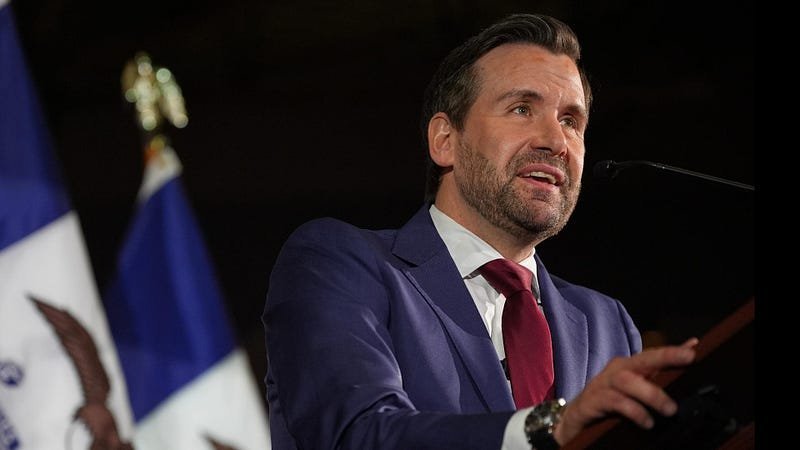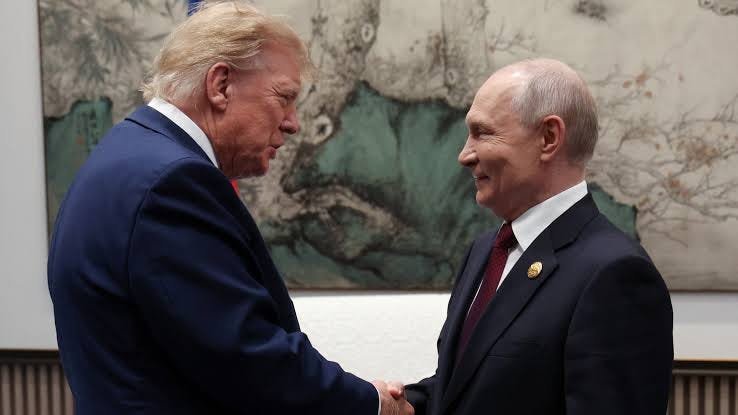
WASHINGTON, D.C. — United States Director of National Intelligence Jay Clayton faced intense political scrutiny in Washington on Sunday, November 22, as he sought to clarify President Donald Trump's repeated characterization of Russian President Vladimir Putin as his friend following last week's unprecedented trilateral summit in China. Appearing on Sunday morning television programs after Trump posted a photograph shaking hands with the Kremlin leader under the bold caption My Friend, Clayton argued that using warm personal language was entirely appropriate inside a closed-door room uniting the leaders of the world's three largest nuclear arsenals. At the same time, America's top intelligence official drew a sharp line regarding Moscow's ongoing invasion of Ukraine, stating unequivocally that Putin is not America's friend in Ukraine while European allies and Democratic lawmakers in Washington condemned the White House's cordial rhetoric.
The political uproar stems from Thursday, November 19, when Putin joined President Trump and Chinese President Xi Jinping on the sidelines of the Asia-Pacific Economic Cooperation summit in Shenzhen to adopt a joint U.S.-Russia-China Heads of State Declaration toward Peace. In the landmark communiqué, the three permanent members of the United Nations Security Council reaffirmed that a nuclear war can never be won and must never be fought, pledged to boost global supplies of refined petroleum products, and jointly criticized overreach by the International Criminal Court—a body that maintains an active arrest warrant against Putin. During his Shenzhen press conference, Putin praised the trilateral dialogue as constructive and confirmed that he and Trump also held a dedicated bilateral meeting covering strategic arms control and the conflict in Ukraine.
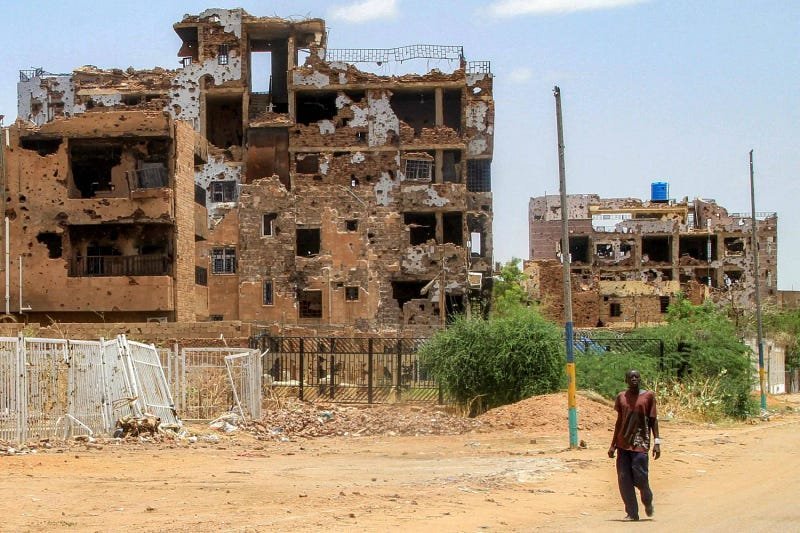
Despite the peaceful rhetoric in China, Putin demonstrated within hours that Moscow has no intention of softening its military campaign or territorial demands. Overnight from November 19 to 20, Russian forces unleashed their largest coordinated missile and drone barrage of the month across 15 Ukrainian regions and Kyiv, damaging critical energy infrastructure and three major bridges spanning the Dnipro River while Russian drones and missiles simultaneously violated Polish and Moldovan airspace. Putin had warned reporters in Shenzhen that Russian forces would deliver much more painful strikes in retaliation for recent Ukrainian attacks on the Crimean Bridge, even as senior Kremlin officials—including Deputy Foreign Minister Sergei Ryabkov and Security Council Deputy Chairman Dmitry Medvedev—flatly rejected U.S. proposals for post-war NATO-style security guarantees in Ukraine.
Following his departure from China, Putin traveled directly to Dushanbe on November 20 for a working visit with Tajik President Emomali Rahmon to reinforce Russian security and economic influence across Central Asia before returning to Moscow for weekend consultations. Back in the Russian capital, the Kremlin is also managing fresh diplomatic friction with European neighbors—summoning Romania's ambassador over visa denials for Russian youth athletes and accusing Estonia of erecting a new Iron Curtain along their shared border—while assessing the weekend destruction of the Russian navy corvette Merkury at a port in eastern Libya.
For policymakers in Washington and NATO capitals, the stark contrast between Putin's summit handshakes in Shenzhen and Russia's escalating military strikes underscores the central dilemma confronting Western diplomacy heading into 2027. While President Trump maintains that personal rapport with a leader commanding thousands of nuclear warheads reduces the risk of global catastrophe, Ukrainian President Volodymyr Zelenskyy and Polish Prime Minister Donald Tusk have warned that Moscow is using diplomatic photo opportunities to mask an uncompromising push for Ukrainian capitulation.