Full articles are free to read through December 10, 2026 (IST). Subscriptions remain available.
By S Vijay Kumar, International Editor | 18th February 2026
In a strategic diplomatic push underscoring Switzerland's active role in fostering European security amid ongoing geopolitical tensions, Federal Councillor Ignazio Cassis, head of the Federal Department of Foreign Affairs (FDFA) and current Chairperson-in-Office of the Organization for Security and Co-operation in Europe (OSCE), will undertake an official visit to Slovenia and Bosnia and Herzegovina from February 18 to 20, 2026. The trip builds on Switzerland's longstanding commitment to the Western Balkans, emphasizing political dialogue, bilateral cooperation, cultural diversity, social cohesion, and the fortification of democratic institutions core pillars of the Swiss OSCE chairmanship program launched earlier this year.
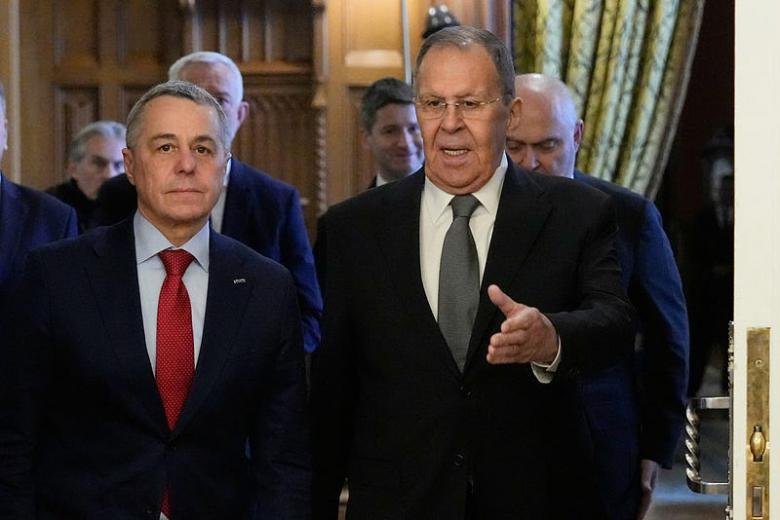
This visit arrives at a crucial juncture for the region and the broader European security architecture. Switzerland, chairing the OSCE for the third time since 1996 and 2014, has prioritized inclusive dialogue as a pathway to peace, particularly in light of the war in Ukraine and persistent challenges in the Western Balkans. Cassis's recent high-profile engagements including unprecedented trips to Kyiv and Moscow alongside OSCE Secretary General Feridun H. Sinirlioğlu highlight Bern's determination to position the organization as an indispensable platform for negotiation and trust-building across divided lines. The Western Balkans tour extends this approach southward, where historical divisions, ethnic complexities, and aspirations for EU integration continue to shape the security landscape.
In Slovenia, discussions will likely center on bilateral ties, European security dynamics, and Switzerland's support for the region's EU accession path, leveraging Ljubljana's position as a stable EU member and advocate for enlargement. The agenda will explore how cultural diversity and inclusive policies can serve as engines for social harmony and institutional resilience values deeply embedded in Switzerland's own multilingual, multicultural model.
The itinerary then shifts to Bosnia and Herzegovina, a nation still navigating the delicate post-Dayton framework and facing internal political strains. Here, talks will delve into strengthening democratic governance, promoting reconciliation across communities, and advancing reforms essential for stability and progress toward Euro-Atlantic integration. Switzerland's engagement in the region has long included substantial cooperation programs focused on economic development, rule of law, and migration management, reinforcing its reputation as a reliable partner committed to long-term peacebuilding.
As OSCE Chairperson-in-Office, Cassis brings added weight to these conversations, using the chairmanship to advocate for cooperative security, adherence to Helsinki principles, and practical steps toward de-escalation in Europe's most fragile zones. The visit reaffirms Switzerland's foreign policy doctrine of active neutrality: contributing concretely to stability without military alliances, while championing dialogue in an era of polarization.
For a global audience attuned to the fragile fault lines of European security from the ongoing conflict in Ukraine to lingering uncertainties in the Balkans this diplomatic initiative signals hope amid complexity. In an interconnected world where regional instability can ripple far beyond borders, Switzerland's measured yet resolute outreach through Cassis demonstrates that sustained political engagement and inclusive multilateralism remain vital tools for safeguarding peace and prosperity. As the Swiss Foreign Minister steps into Ljubljana and Sarajevo, the international community watches closely, recognizing that small nations can wield outsized influence when guided by principle, persistence, and a genuine commitment to dialogue.