Full articles are free to read through December 10, 2026 (IST). Subscriptions remain available.
By the International Reporter | 24th September 2025
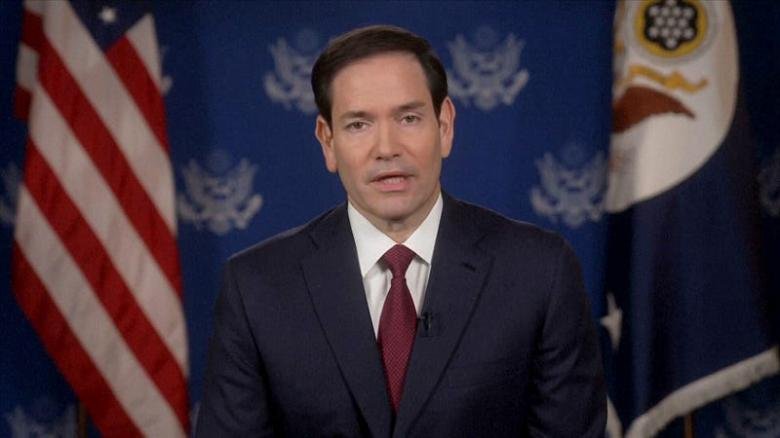
NEW YORK — Secretary of State Marco Rubio, appearing on Good Morning America, defended the Trump administration's handling of the war in Ukraine and its recent cuts to humanitarian aid. Speaking from New York, where President Trump is attending the United Nations General Assembly, Rubio addressed questions about the U.S. approach to both conflicts and international policy.
Rubio was questioned by anchor George Stephanopoulos about President Trump's strategy toward Russia, particularly following President Putin's intensified attacks on Ukraine and incursions into NATO airspace since their meeting in Alaska. Rubio argued that the administration has taken action, citing new tariffs imposed on close partner India for its purchase of Russian oil. "I think he has taken action," Rubio said, pointing to a bill being considered by Congress that targets tariffs on countries like India and China that continue to buy Russian energy. He also called on European nations to reduce their reliance on Russian gas and oil, which he stated "directly fuel the war effort."
The Secretary also maintained that the U.S. is the only country with the influence to negotiate an end to the conflict, noting that President Trump is the only world leader who can talk to both sides. He mentioned that while the war continues, the Ukrainians have "inflicted substantial damage on the Russians," citing that 20% of Russia's refining capacity has been taken offline. Rubio described the conflict as a "stupid war" and stated that while he hopes for a peaceful end, the President is prepared to take further action if necessary.
On the topic of humanitarian aid, Rubio defended the administration's decision to close the Agency for International Development (USAID), calling it a "dysfunctional organization." He disputed a report from The New York Times that documented deaths caused by aid cuts, arguing that the reported internal memo was merely an email from someone who disagreed with the policy. Rubio claimed the U.S. would give more foreign aid than any other country, but would do so in a new, more effective way. He explained that the new approach would involve direct compacts with countries and would empower U.S. embassies to direct funding, avoiding what he called a "NGO industrial complex" that he alleged was misallocating funds.
When pressed on whether anyone had died due to the aid cuts, Rubio placed the blame on other factors. He argued that aid often fails to reach its intended recipients due to ongoing conflicts and criminal gangs, citing examples in Sudan and Haiti. "People have died because gangs steal the aid. People have died because the distributors of aid have not done well," he stated, adding that other countries should also be held accountable for not contributing enough. He concluded by reiterating that the U.S. will continue to save lives but will do so in a "responsible way," ensuring that taxpayer funds are not used for "corrupt" or ineffective programs.