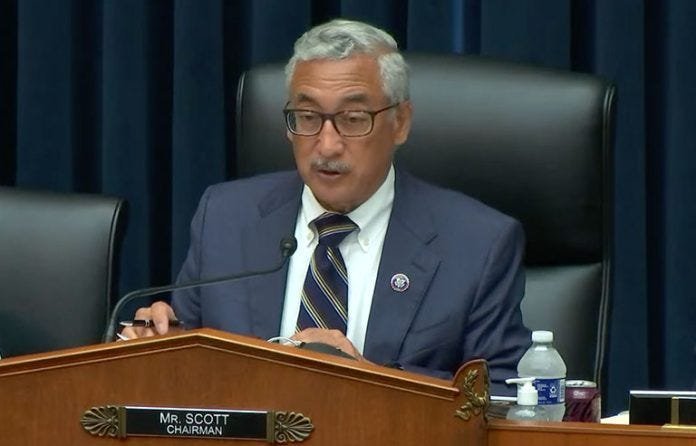
WASHINGTON, D.C. — House Education and Workforce Committee Ranking Member Robert C. "Bobby" Scott launched a sharp rebuke against the U.S. Department of Labor on Monday after federal regulators unveiled a sweeping proposed rule designed to strip environmental, social, and governance considerations from workplace retirement plan management.
The Virginia Democrat warned that dismantling the 2022 Biden-era regulatory framework blindsides plan fiduciaries to tangible financial threats while exposing millions of American workers to volatile assets. Released by the Employee Benefits Security Administration under the title Loyalty and the Exclusive Purpose Rule in Selecting Plan Investments and Exercising Shareholder Rights, the proposal amends the Employee Retirement Income Security Act of 1974 by eliminating both the longstanding tiebreaker test and participant preference provisions.
Under the new framework scheduled for publication in the Federal Register on November 24, fund managers overseeing roughly 837,000 retirement plans and over 6.1 million participants must justify investment selections and proxy voting strictly on pecuniary returns rather than collateral social or environmental benefits.
Scott argued that evaluating physical climate risks and labor standards represents sound financial due diligence rather than political ideology, noting that assessing whether a real estate asset faces literal flooding from rising sea levels is a matter of basic math. He accused the Trump administration of regulatory hypocrisy by restricting fiduciaries from weighing documented climate and governance risks at the exact moment federal officials are advancing legal safe harbors to bring volatile digital assets, private equity, and private credit into 401(k) portfolios.
The regulatory clash underscores a deep partisan divide over the future of American retirement savings. Labor Secretary Keith Sonderling and House Education and Workforce Committee Chairman Tim Walberg defended the rewrite as a vital safeguard ensuring hard-earned nest eggs are managed solely for financial growth rather than corporate or social agendas.
Scott demanded that the administration immediately rescind the proposal and pledged to summon Labor Department officials before Congress early next year to answer for policies he contends undermine long-term retirement security. Once published on Tuesday, the rule will open a 60-day public comment window that is expected to draw fierce pushback from sustainable investment advocates, labor unions, and Democratic lawmakers.