Full articles are free to read through December 10, 2026 (IST). Subscriptions remain available.
By the International Reporter | 20th January 2026
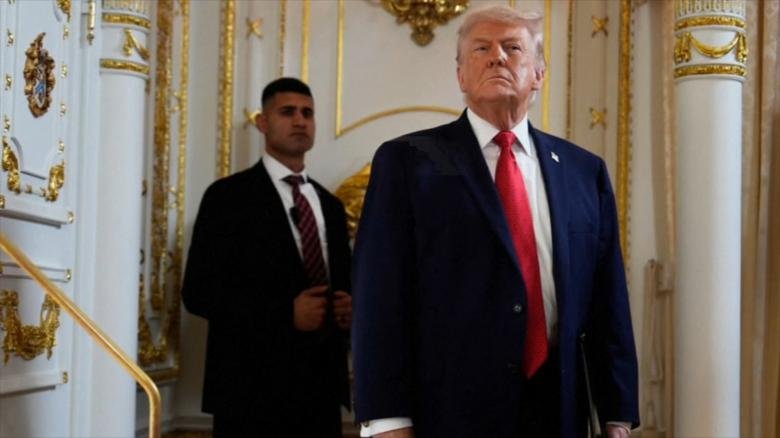
The leaders of all 27 European Union nations will meet for an "extraordinary meeting" later this week, European Council President Antonio Costa said on Sunday, in response to U.S. President Donald Trump's escalating pressure campaign to acquire Greenland.
European leaders are mobilizing after Trump on Saturday announced a 10% tariff to be imposed on all goods sent to the U.S. from eight NATO nations Denmark, Norway, Sweden, France, Germany, the U.K., the Netherlands and Finland that recently sent small contingents of troops to Greenland to take part in military exercises there.
"Considering your Country decided not to give me the Nobel Peace Prize for having stopped 8 Wars PLUS, I no longer feel an obligation to think purely of Peace, although it will always be predominant, but can now think about what is good and proper for the United States of America," Trump wrote.
"Denmark cannot protect that land from Russia or China, and why do they have a 'right of ownership' anyway? There are no written documents, it’s only that a boat landed there hundreds of years ago, but we had boats landing there, also," the president continued. "I have done more for NATO than any other person since its founding, and now, NATO should do something for the United States. The World is not secure unless we have Complete and Total Control of Greenland."
Costa said he had called the meeting due to the "significance of recent developments."
European leaders are mobilizing after Trump on Saturday announced a 10% tariff to be imposed on all goods sent to the U.S. from eight NATO nations Denmark, Norway, Sweden, France, Germany, the U.K., the Netherlands and Finland that recently sent small contingents of troops to Greenland to take part in military exercises there.
Costa said recent conversations with European leaders had reconfirmed their "strong commitment" to international law, Arctic security through NATO and solidarity with Denmark and Greenland in the face of Trump's continued effort to acquire the Arctic island.
European leaders also agreed that "tariffs would undermine transatlantic relations and are incompatible with the EU-U.S. trade agreement," Costa said, noting the bloc's "readiness to defend ourselves against any form of coercion" and to engage "constructively with the US on all issues of common interest."
An EU Council spokesperson confirmed to mediathat the summit would be an in-person meeting in Brussels.
Trump said the new tariffs will come into force on Feb. 1 and will increase to 25% on June 1. The president said the measures would remain in place until the U.S. is able to purchase Greenland.
Greenland is a self-governing territory of the Kingdom of Denmark. Trump first raised the prospect of acquiring the minerals-rich island in his first term. Danish and Greenlandic politicians have repeatedly rebuffed such proposals.
Indeed, it was the recent deployment of more NATO forces to the Arctic territory that prompted Trump to threaten a new raft of tariffs. The troops traveled to Greenland to take part in the Danish-led Operation Arctic Endurance.
Danish Defense Minister Troels Lund Poulsen and Greenlandic Foreign Minister Vivian Motzfeldt are scheduled to visit NATO's headquarters in Brussels on Monday for a previously planned meeting with the alliance's Secretary General Mark Rutte, NATO said in a press release.
On Monday, British Prime Minister Keir Starmer urged "calm discussion" between allies. "The security of Greenland matters and it will matter more as climate change reshapes the Arctic," he said, noting the need for "greater attention, greater investment and stronger collective defense."
"The United States will be central to that effort, and the U.K. stands ready to contribute fully alongside our allies through NATO," Starmer said, adding that any decisions about the territory's future should be left to Greenlanders and Danes.
Trump's use of tariffs against allies, Starmer continued, "is completely wrong. It is not the right way to resolve differences within an alliance. Nor is it helpful to frame efforts to strengthen Greenland's security as a justification for economic pressure."